What Is
Artistic Journalism?
Factual reporting shaped through deliberate public form. The form is not decoration. It is part of the method.
The point is not to make journalism more artistic. The point is to choose a form that makes evidence more public, more legible, and harder to dismiss.
Artistic Journalism begins when a story needs more than publication. It still answers to evidence, sources, verification, consent, editing, and public accountability. What changes is the public encounter: the story may become a room, a rule system, a drawn sequence, a sound work, an installation, a literary structure, or a research model people can inspect.
Reporting first. Form second. Public encounter always.
The reporting comes first: interviews, documents, observation, data, archives, fieldwork, testimony, and editorial judgment. Without that ground, the work may be art, advocacy, design, or performance, but it is not journalism.
The form comes next, and it is not a skin applied at the end. It is a decision about how the public should meet the evidence. A stage changes attention. A game exposes pressure. A comic can protect a source while showing sequence and memory. A spatial model can make technical evidence inspectable.
Verification, sourcing, context, consent, editorial judgment, correction, and accountability.
The audience may gather, listen, move, choose, fail, inspect, witness, compare, or remember in public.
Source path, reconstruction limits, rights, uncertainty, and the editorial frame around the form.
The form is chosen because the story needs a certain kind of attention.
A standard article is a powerful form. But it privileges reading, sequence, summary, quotation, search, and private attention. When a story needs collective presence, physical scale, embodied choice, visual reconstruction, or sensory access, another form may be more honest.
If the story is about a system of incentives, rules may explain it better than description. If the story is about testimony, a stage or audio work may let voice carry its own weight. If the story is about spatial violence, a model or map may reveal relationships that prose can only describe.

Evidence changes temperature when it moves.
What is known
Documents, data, interviews, images, recordings, archives, field notes, expert review, or direct observation.
What changes form
Scene order, rules, drawing, spatial model, sound, performance, installation, interface, or literary structure.
What the public does
Reads, listens, gathers, moves, chooses, compares, inspects, remembers, or sits with contradiction.
What stays traceable
Sourcing, consent, rights, reconstruction limits, uncertainty, editorial frame, and the route back to evidence.
The field is wider than one format.
These are not decorative categories. They are different ways of carrying evidence.
01 / Live journalism
Reported stories built for a room, where timing, presence, voice, image, and collective attention matter.
02 / Newsgames
Reported systems made playable through rules, scarcity, pressure, incentives, failure, and consequence.
03 / Comics journalism
Fieldwork, interviews, memory, and sequence carried through drawing, panels, captions, and visual interpretation.
04 / VR / spatial / interactive
Reporting that uses place, scale, perspective, navigation, 360 video, VR, AR, or spatial audio.
05 / Documentary theatre
Documents, testimony, hearings, transcripts, interviews, and public issues shaped for performance.
06 / Audio and listening
Voice, field sound, silence, rhythm, transcript, description, and access designed as editorial structure.
07 / Installation and exhibition
Journalism placed into civic space through walls, objects, projections, archives, posters, rooms, or public display.
08 / Literary journalism
Reported nonfiction using scene, structure, voice, rhythm, and narrative pressure without abandoning fact.
09 / Research-led investigation
Evidence made public through maps, models, archives, reconstructions, interfaces, and exhibition logic.
Examples that show the method.
These are references, not templates to copy.
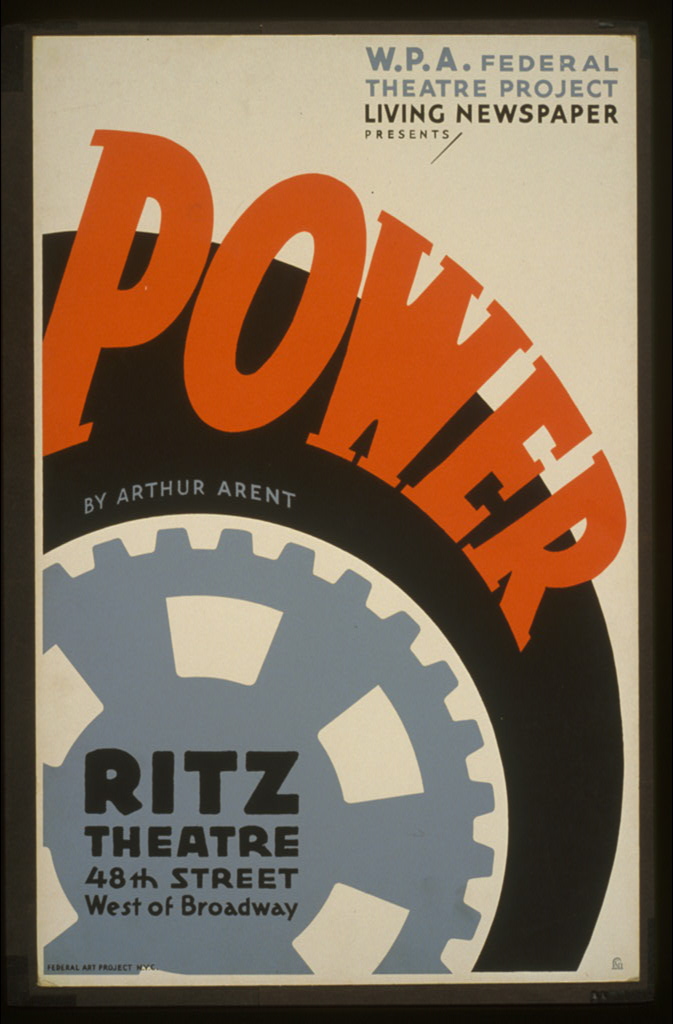
Living Newspaper
The Federal Theatre Project staged current events and public problems, making policy and social evidence a live civic encounter.
The Uber Game
The Financial Times turned gig-economy reporting into a rule system where the reader experiences time, rating pressure, money, and exhaustion.
The Photographer
Photography, drawing, and captions combine to report a Doctors Without Borders mission in Afghanistan.
Project Syria / 6x9
Immersive works by Nonny de la Pena and The Guardian show how spatial presence can report place, confinement, danger, and context.
Forensic Architecture
Spatial analysis, models, open-source material, and exhibition formats turn fragmented evidence into public investigation.
Auditorial
The Guardian, RNIB, and Google treated screen-reader-first storytelling as editorial design, not a compliance layer.
The method earns its place only under pressure.
The story needs encounter
The public has to feel scale, pressure, voice, memory, contradiction, place, or collective attention.
The evidence is strong enough
The reporting can survive scrutiny after being translated into public form.
A clear article would be better
Not every story needs a room, game, comic, installation, or immersive layer.
The form hides uncertainty
If reconstruction, performance, or design makes weak evidence look certain, the form is failing the journalism.
Starting points, not decoration.
Artistic Journalism: Confluence in Forms, Values and Practices
Scholarly grounding for the term Artistic Journalism beyond this site.
Aesthetic Journalism
A conceptual source for journalism, art, aesthetics, and public truth claims.
Living Newspaper
Historical precedent for staging current events and public facts.
The Uber Game production notes
A newsroom account of gig-economy reporting translated into game mechanics.
Forensic Architecture projects
Research-led investigations using spatial, visual, and architectural methods.
Newsgames
A key reference for the intersection of games and journalism.
Move from definition to decision.
The Playbook path is quiet on purpose. First understand the field. Then test whether a real story needs a form beyond the article.