Testimony / archive / stage

The Document
Gets A Body

Documentary theatre does not decorate the record. It asks what happens when public evidence is spoken by people, in a room, before witnesses.

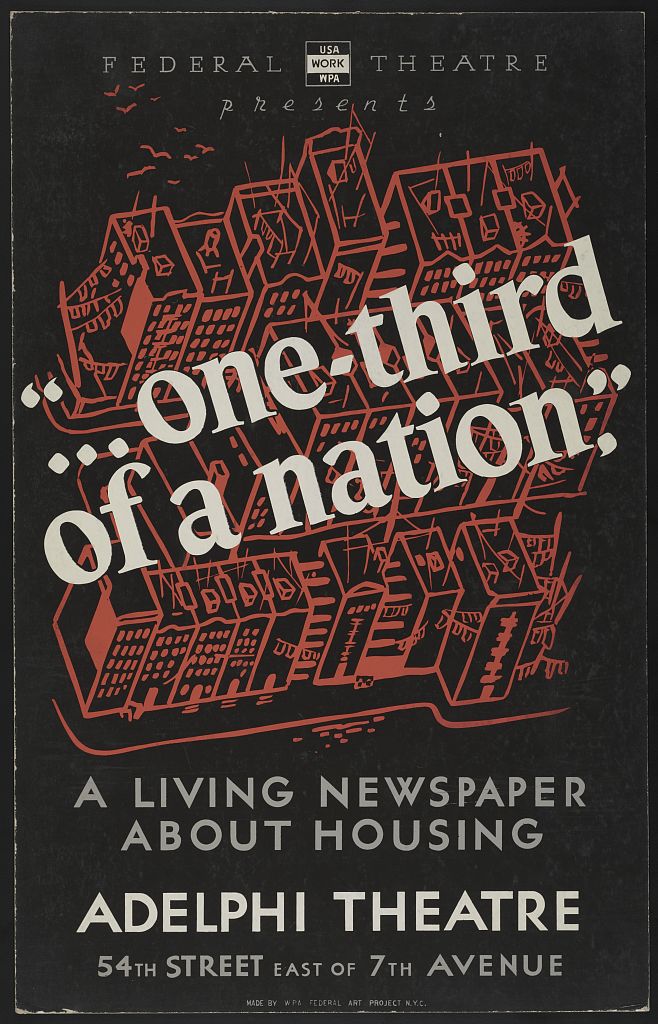
WPA Federal Theatre Project poster for One-Third of a Nation.
ROOM / POLICY
One-Third of a NationLibrary of Congress

A transcript is not neutral once a body speaks it.

Documentary theatre is built from factual material: interviews, court records, official transcripts, archives, hearings, field notes, and reported events. It can be verbatim. It can be composed. It can be a tribunal, a living newspaper, a monologue cycle, or a staged file.

The strict test is not whether it feels authentic. The test is whether the audience can understand the source contract: whose words, whose documents, what edits, what omissions, and what public responsibility follows.

// DEFINITION

Theatre built from records, not invented backstory.

Documentary theatre uses source material as dramatic material. The archive is not a research step hidden backstage. It is the spine of the work.

In a journalistic frame, the performance must protect attribution, context, source dignity, correction, and the boundary between quotation and composition.

Verbatim

The exact words matter: pauses, repetitions, official phrasing, evasions, contradictions, and procedural language.

Documentary

The work may include archives, records, field reporting, interview fragments, media clips, and constructed scenes around factual material.

Tribunal

Legal or public inquiry forms can make responsibility, burden of proof, and institutional language visible.

// READING THE RECORD

The archive does not become public just because it is quoted.

Documentary theatre is powerful because documents are not inert on stage. A bureaucratic phrase can become chilling when spoken aloud. A repeated denial can become a rhythm. A witness statement can stop being a line in a file and become a body addressing other bodies. Performance gives public records social temperature.

That temperature is also the danger. A transcript has gaps, procedures, coercions, and power relations inside it. An interview has conditions under which it was given. A public record may be accurate and still incomplete. If the performance smooths those conditions away, the audience receives a clean drama instead of a public problem.

The stage must therefore carry the edit visibly. It should help the audience know when language is verbatim, when testimony has been compressed, when characters are composite, when documents are in conflict, and when the production is asking them to sit with uncertainty rather than resolve it.
// PRODUCTION ANATOMY

The script is an edited evidence room.

The stage can make documents legible by turning them into timing, breath, interruption, bodies, and public attention. That power needs an audit trail.

01

Archive

Public records, case files, hearings, news archives, photographs, letters, police material, and institutional language.

02

Testimony

Interviews, oral histories, courtroom speech, community memory, witness accounts, and recorded speech acts.

03

Dramaturgy

Selection, ordering, silence, repetition, casting, scene breaks, sound, and the decision to let documents collide.

04

Disclosure

What is verbatim, what is edited, what is composite, what is withheld, and what context the audience needs.

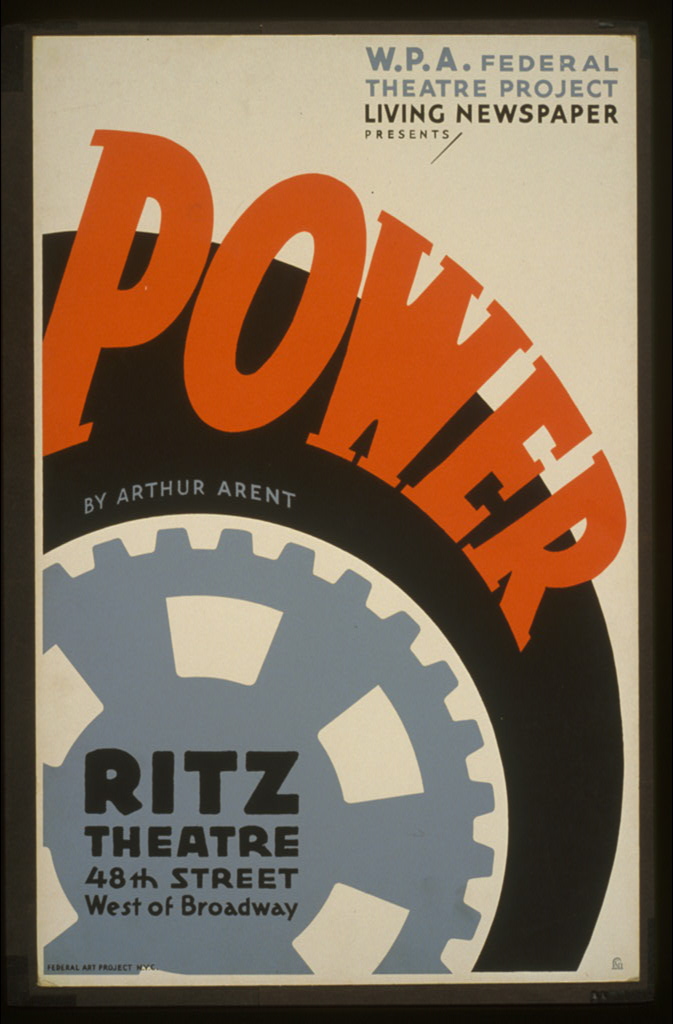
WPA Federal Theatre Project poster for the Living Newspaper production Power.
LIVE FACTS
Living Newspaper posterLibrary of Congress
// PUBLIC WITNESS

The audience hears institutions speak.

Language

Official wording can sound absurd, violent, evasive, or bureaucratically calm when spoken aloud.

Witness

Interview material gains social force because the room listens together, not privately.

Compression

A two-hour stage work may compress years. The compression must not erase causal context.

Aftercare

Sources and communities live with the production after critics and audiences leave.

// RISKS

Performance can make edited evidence feel complete.

False certainty

A strong actor can make contested testimony sound settled. The staging needs visible limits.

Consent drift

Interview consent is not automatically consent for touring, recording, translation, casting, or revival.

Compression harm

Cutting context can make complex public conflict feel clean, dramatic, and wrong.

Community afterlife

The people represented may keep carrying consequences after the production moves on.

// NEXT MOVE

Let the document decide the stage.

Before staging testimony, build the source ledger: exact words, permissions, redactions, edits, absences, and the audience context that keeps the performance accountable.