Lesson 01
Name the ethical role
The phrase story-sharer changes the contract. It reminds the team and audience that testimony is not raw material to be extracted.
A stitched! live journalism production where wartime diaries, testimony, sound, video, and audience responsibility share the room.
A community-based live journalism production that turns reporting on drone warfare in Gaza into an embodied listening space. Diaries, testimony, sound, projected media, music, and facilitated audience reflection replace the usual distance of conflict coverage.
stitched! is a live journalism studio at Toronto Metropolitan University's Creative School, founded by journalist and educator Sonya Fatah.
The studio's vocabulary matters: participants are described as story-sharers rather than sources, and the format includes a community gatherer who helps the audience process role, responsibility, action, and direction.
Living with Drones grew from this practice into an international touring piece, moving through London, Toronto, Washington, Ottawa, and university or community contexts.
The case belongs because it treats the audience as witnesses, not spectators: the journalism is reported, performed, sounded, projected, and then handed back as a civic question.
Stills from the production show how the reporting moved between stage presence, projection, sound, and audience attention.
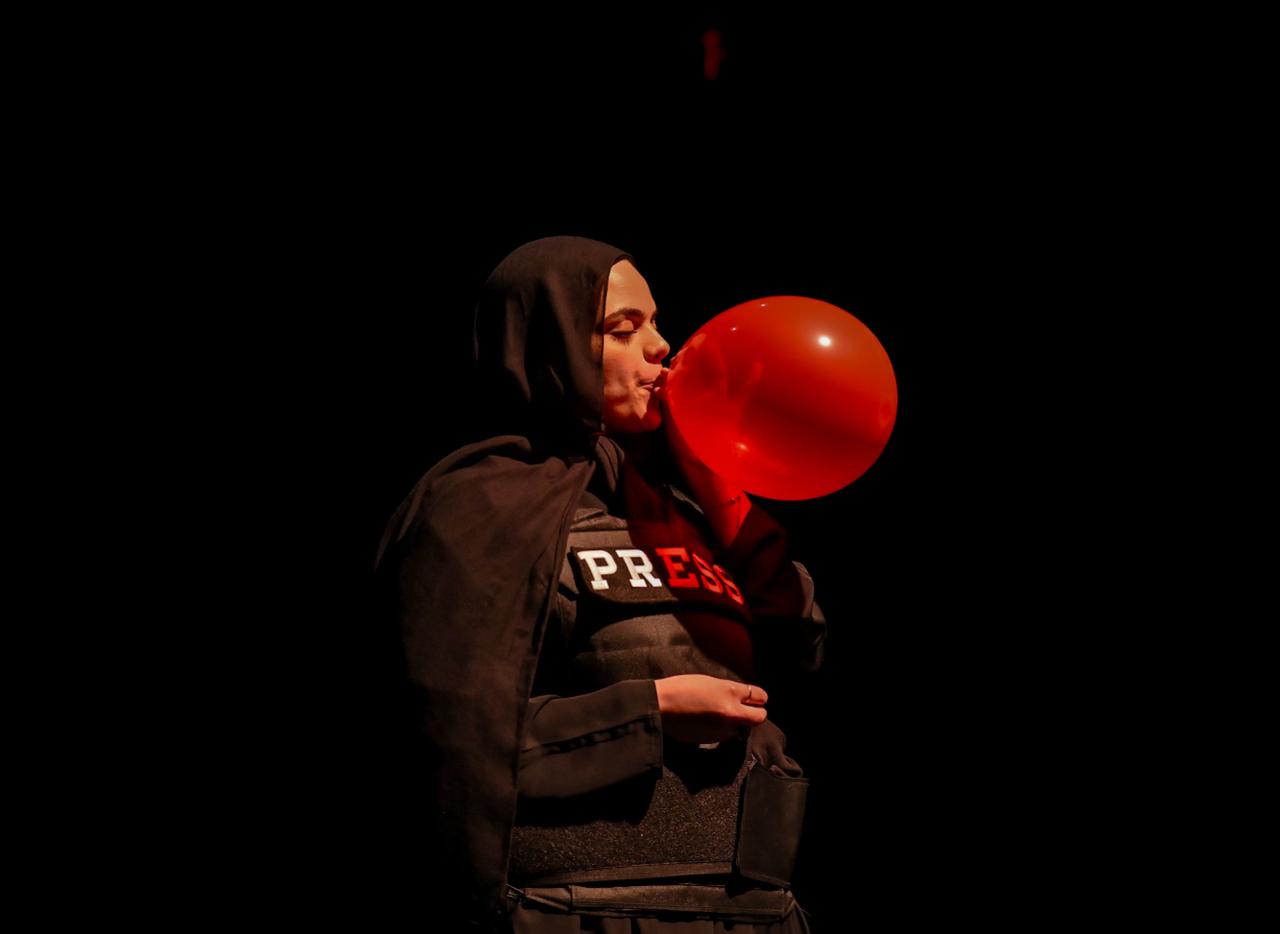
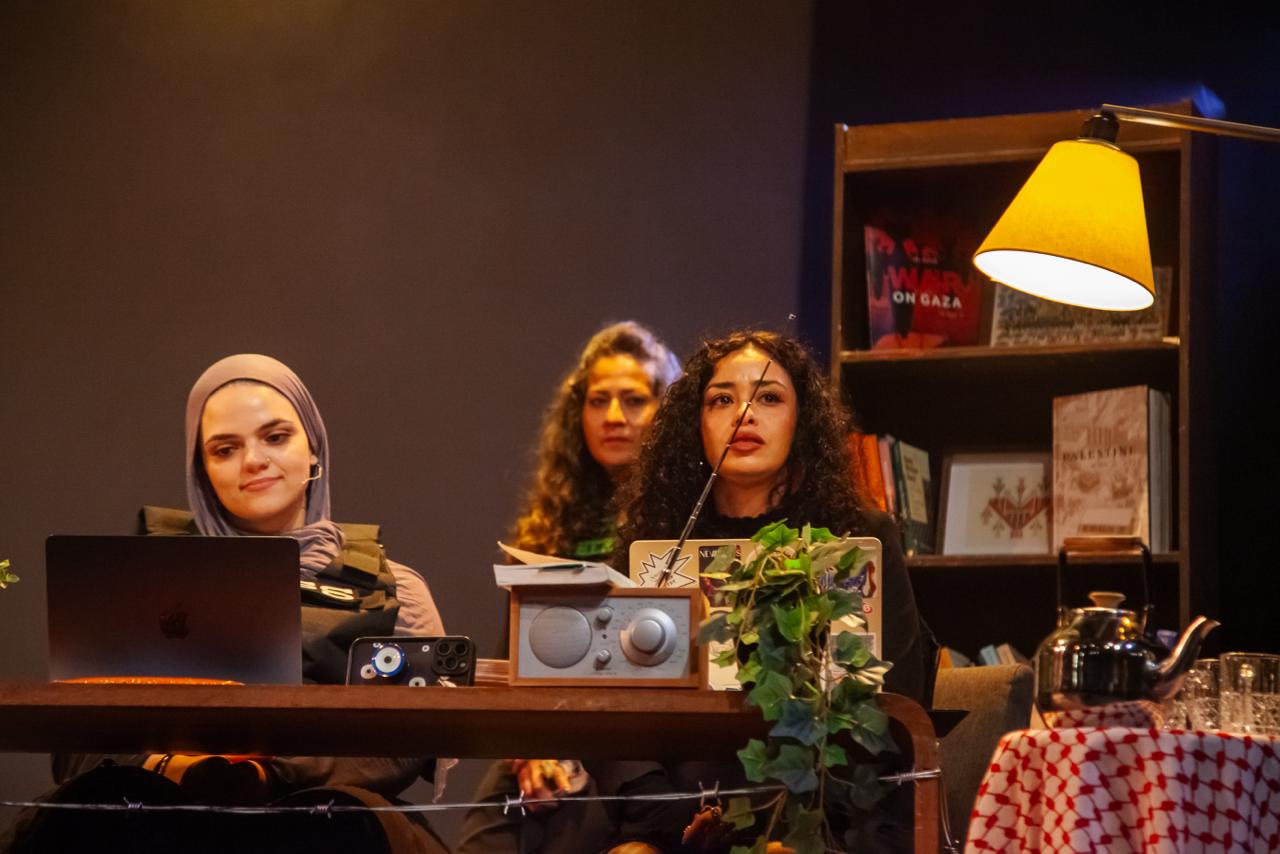
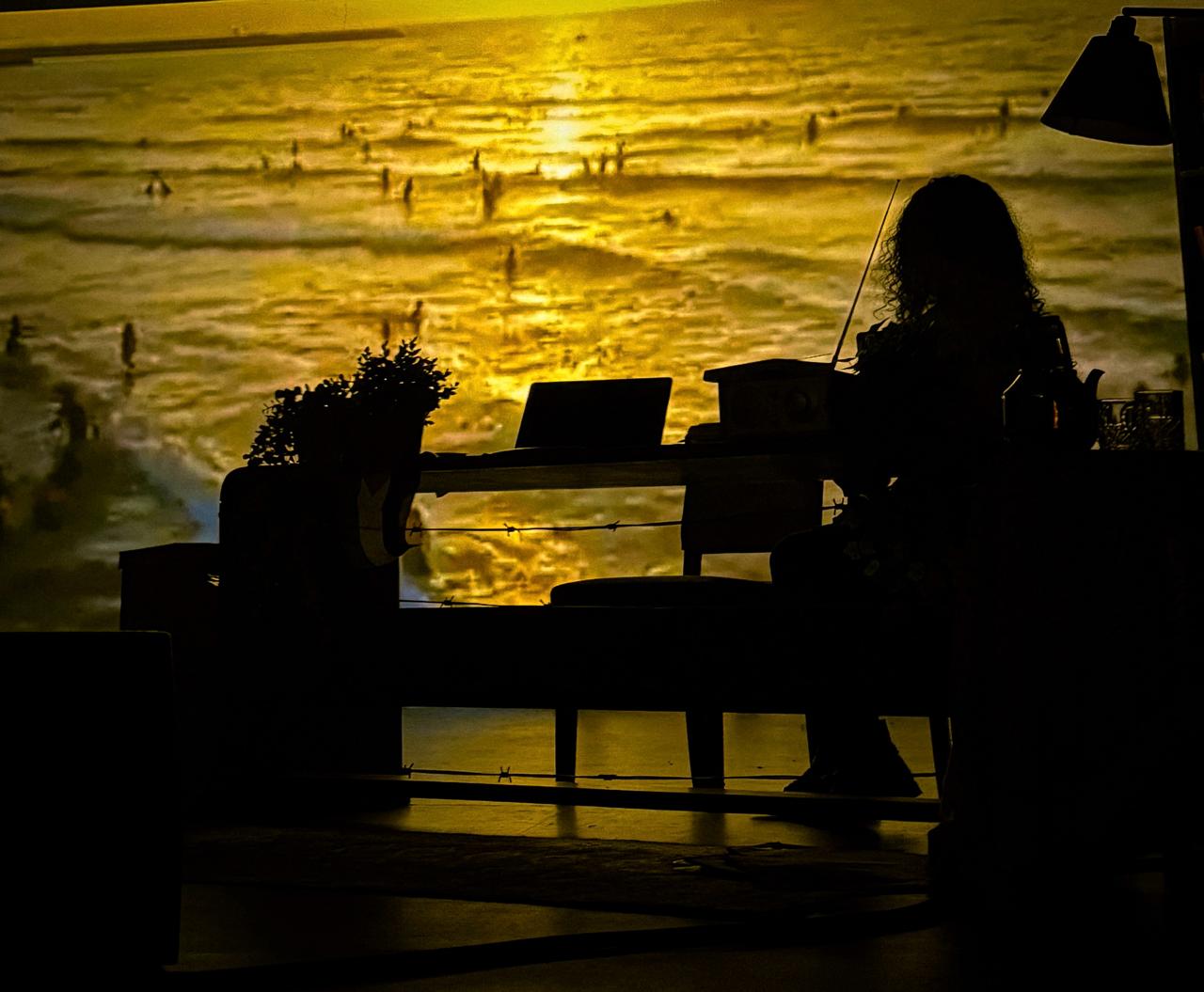
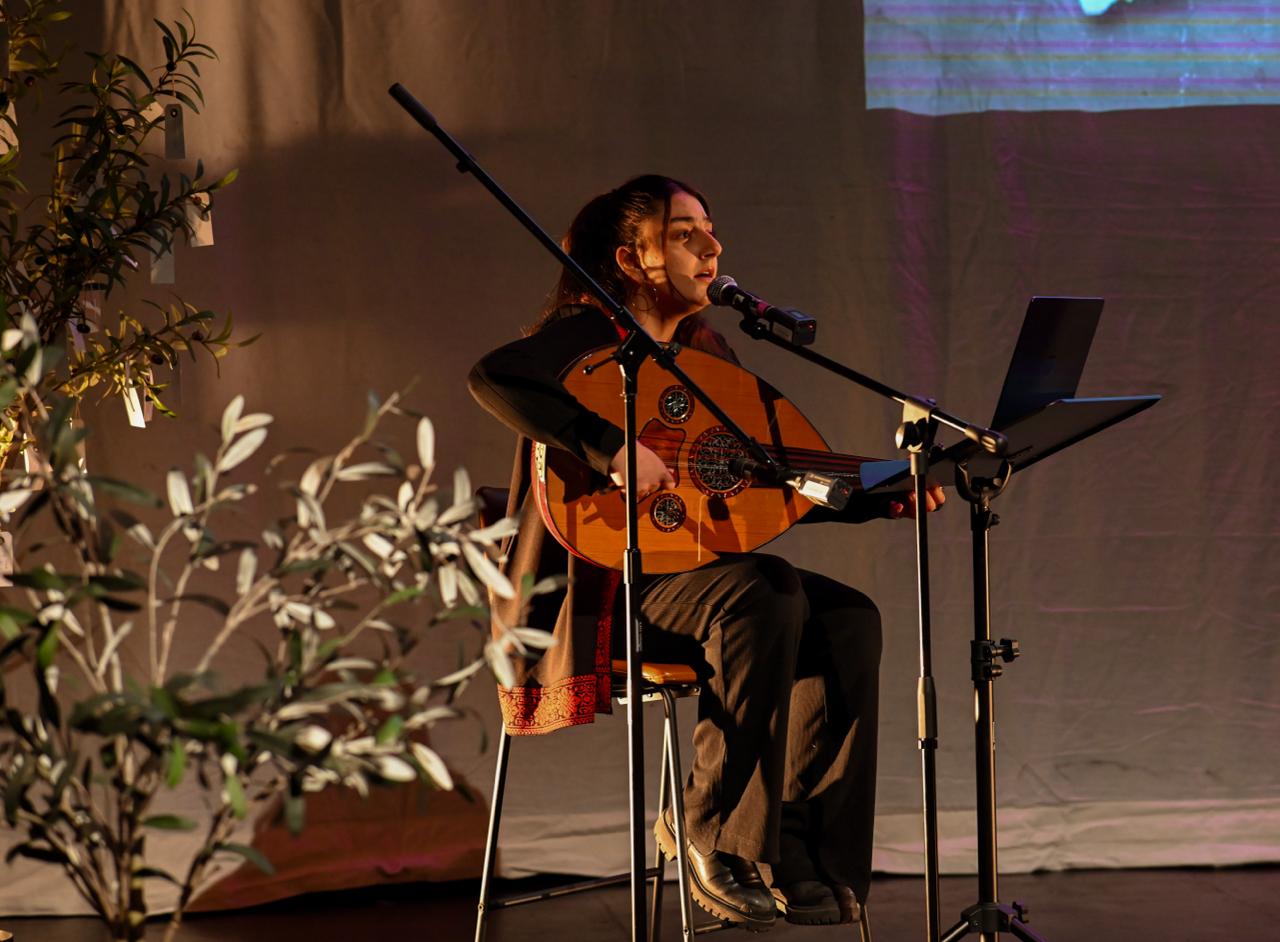
The show ties first-person accounts from Gaza to wartime diaries, documentary audio, projected stills and video, live music, and the physical pressure of amplified drone sound.
Drone sound is not treated as atmosphere. It becomes reporting material, making the mechanical hum part of what the audience has to understand.
The structure moves between narration, testimony, evidence, and facilitated calls to action, so the performance does not end as mood alone.
The London debut took place in January 2025 at Camden People's Theatre and P21 Gallery.
Toronto performances followed at The Theatre Centre in February and March 2025, with later Washington and Ottawa presentations.
TMU coverage notes a planned return in March 2026 at the University of Toronto Scarborough.
The phrase story-sharer changes the contract. It reminds the team and audience that testimony is not raw material to be extracted.
A sonic fact can make distance collapse, but only when the reporting explains what the sound means and where it comes from.
The calls to action, post-show discussion, and donations show that the desired audience response was not only empathy.
