24
captured media items
10
languages in the archive
05.08-05.11
first wave captured
125+
sources inside the game
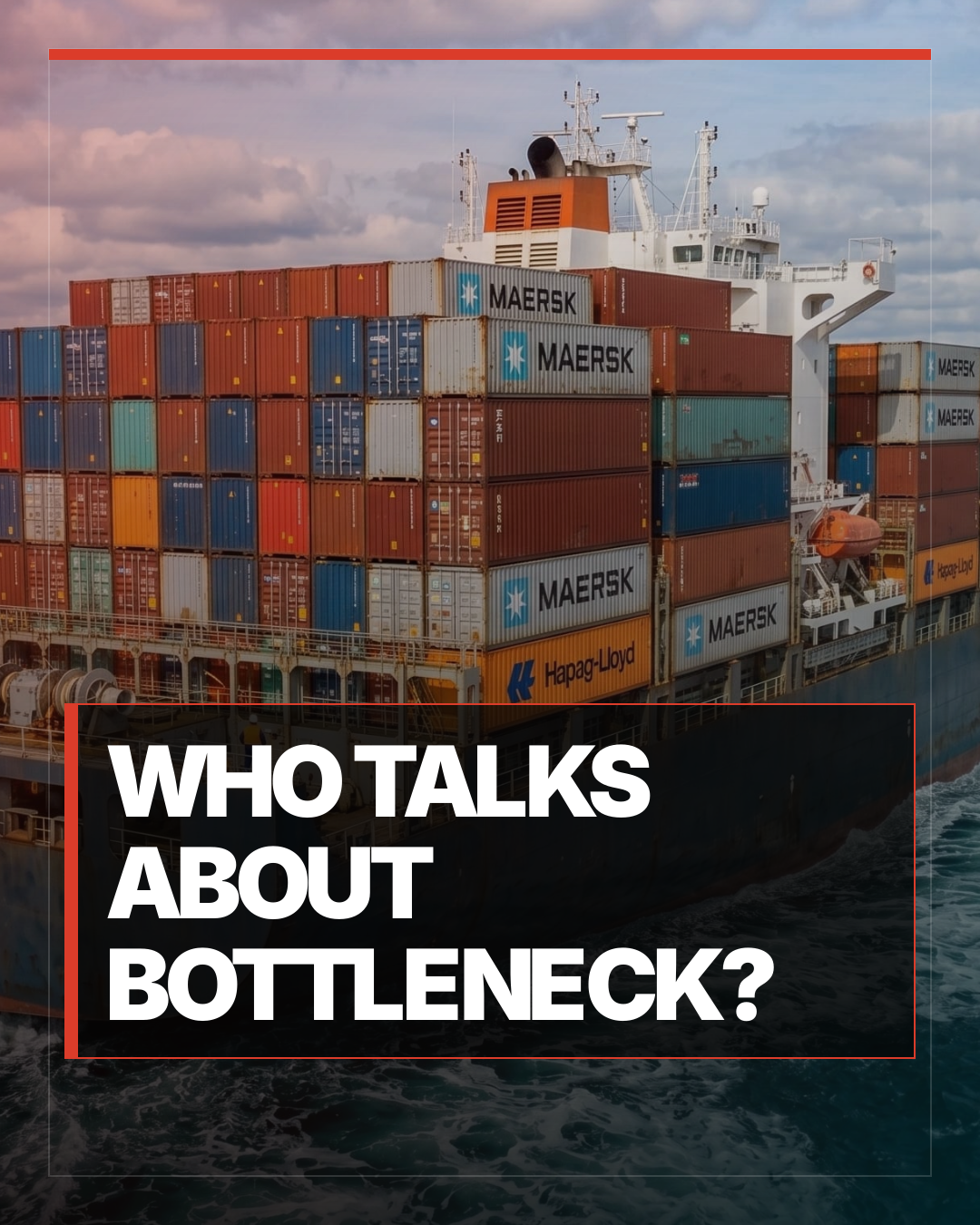
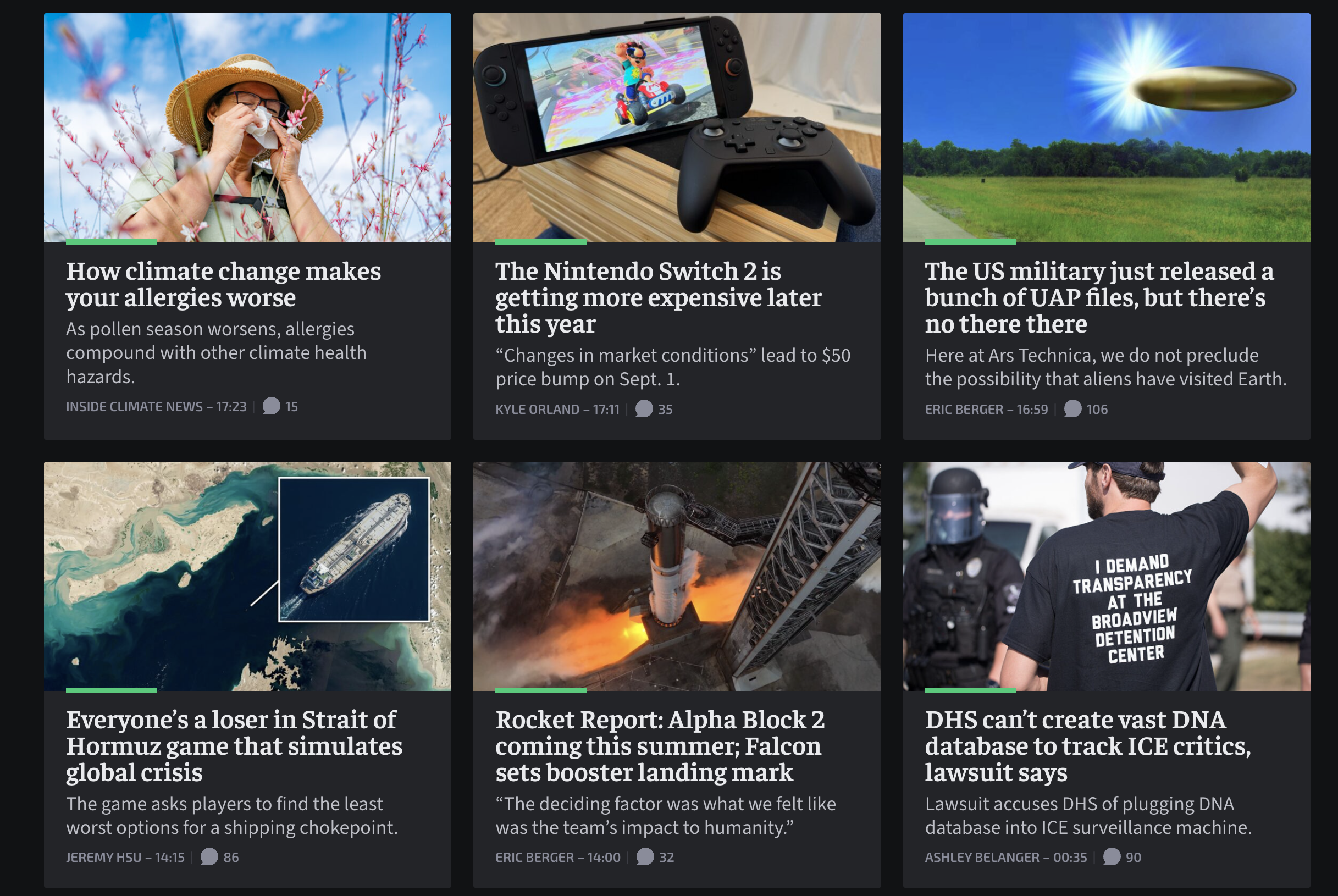
The first signal came from Ars Technica.
That mattered because BOTTLENECK was never only a launch. It was an argument in playable form. A game about the Strait of Hormuz, built as journalism, released for free, designed around constraint rather than fantasy. Three transit slots a day. Two thousand ships waiting. No clean answer.
The question was simple: would anyone outside my own channels understand the form?
Within four days, the answer started to arrive in public. Technology sites, games publications, media-industry outlets, Polish trade press, Ukrainian tech media, Romanian syndication, German tech media, Swedish gaming coverage, Vietnamese media, Spanish gaming press, Hong Kong tech media. By May 11, 2026, the local archive held 24 captured media items with screenshots, PDFs, logos, and source links.
Not all of that is original reporting. Some of it is syndication. Some of it is aggregation. Some of it repeats the same frame through another market and language. That is still useful. Media spread has a texture. You can see which sentence travels, which image gets reused, which idea survives translation, and which outlets understand the work as journalism rather than a novelty link.
THE STORY THEY PICKED UP
The strongest coverage did not treat BOTTLENECK as a trick. It understood the design problem. A real crisis had been covered through articles, numbers, maps, and expert quotes. The game asked something else of the reader: make a decision, accept the cost, and watch the pressure move.
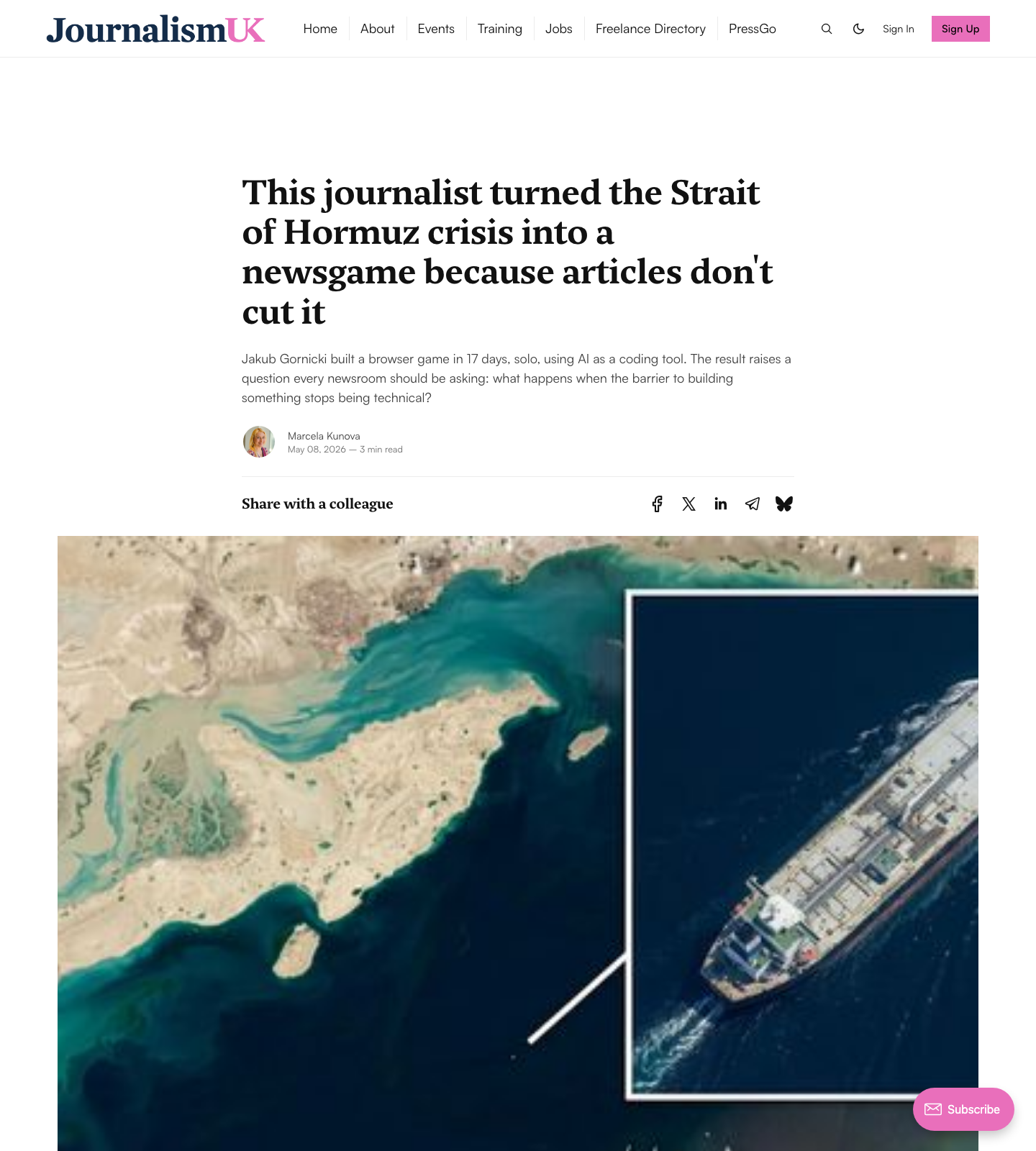
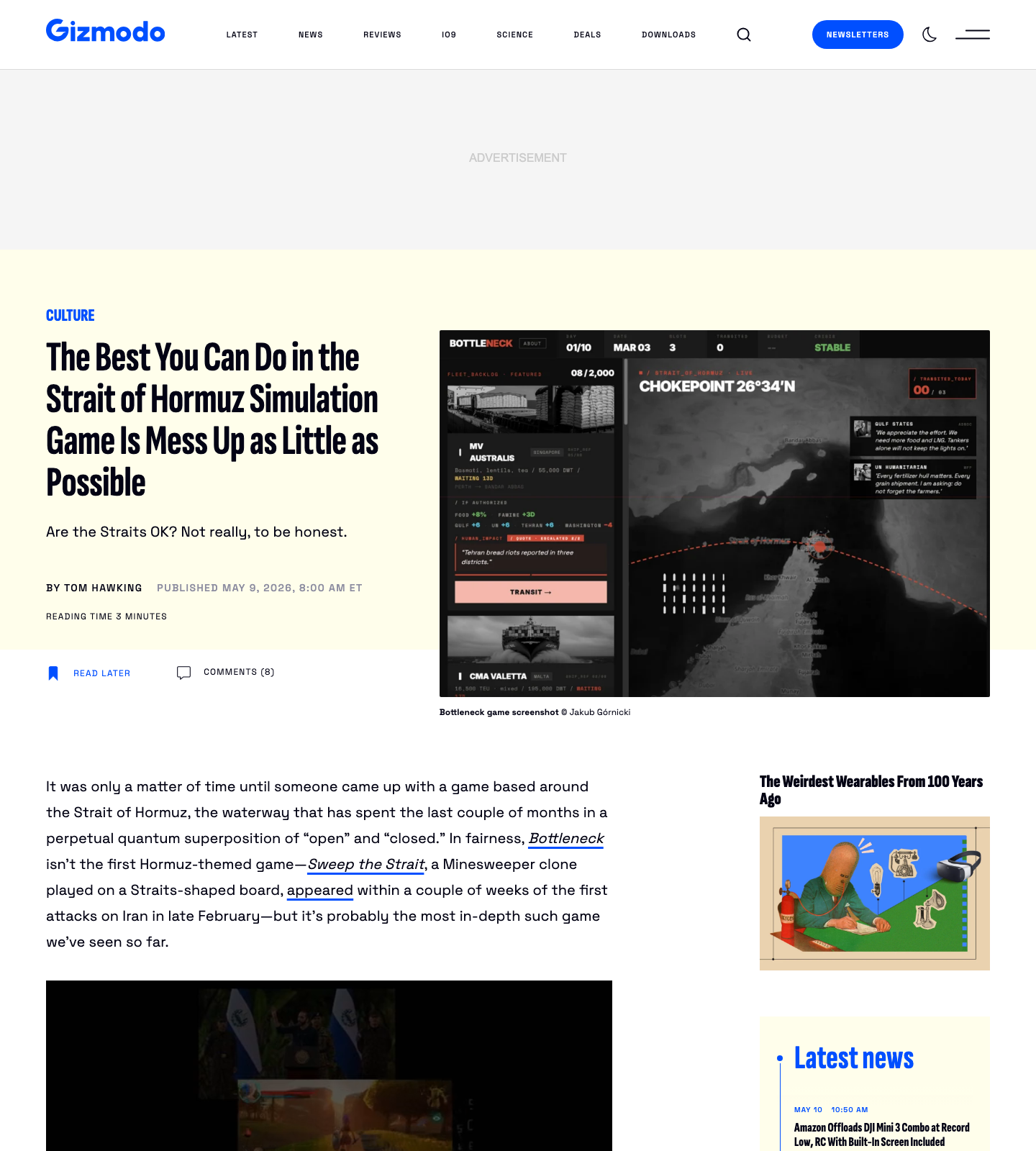
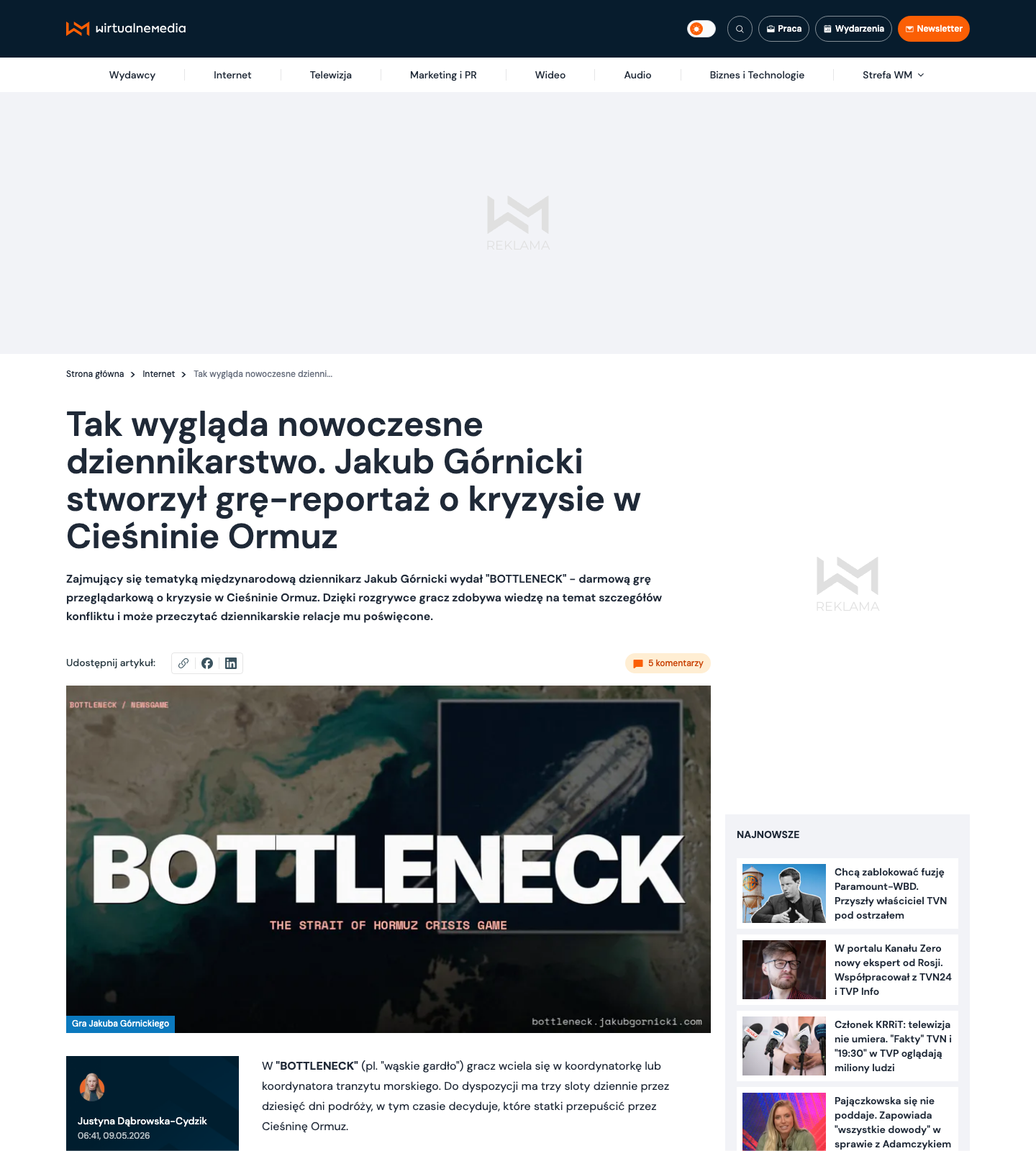
Ars Technica framed it as a game of the "least worst options." Journalism.co.uk placed it inside the newsroom question that interests me most: what happens when the technical barrier to building new forms starts to fall? Gizmodo understood the tone: serious, not cute. Wirtualne Media went straight for the local media frame: modern journalism, but in the body of a game. Golem.de described the connection between real events and gameplay. Mezha caught the end-state: this is not a game you win.
That is the result I care about. Not only mentions. Recognition of the container.
Ars Technica
"least worst options for a shipping chokepoint"Open source
Journalism.co.uk
"because articles don't cut it"Open source
Gizmodo
"This game is serious, both in tone and in subject matter."Open source
Golem.de
"echte Geschehnisse mit Gameplayelementen verknüpft"Open source
Wirtualne Media
"Tak wygląda nowoczesne dziennikarstwo."Open source
Mezha
"cannot be won: it can only be completed with some damage"Open source
G4Media
"poate fi instructiv să joci noul joc Bottleneck"Open source
Old School Club
"no hay soluciones limpias en crisis geopolíticas reales"Open source
THE ARTICLE PAGE BECAME EVIDENCE
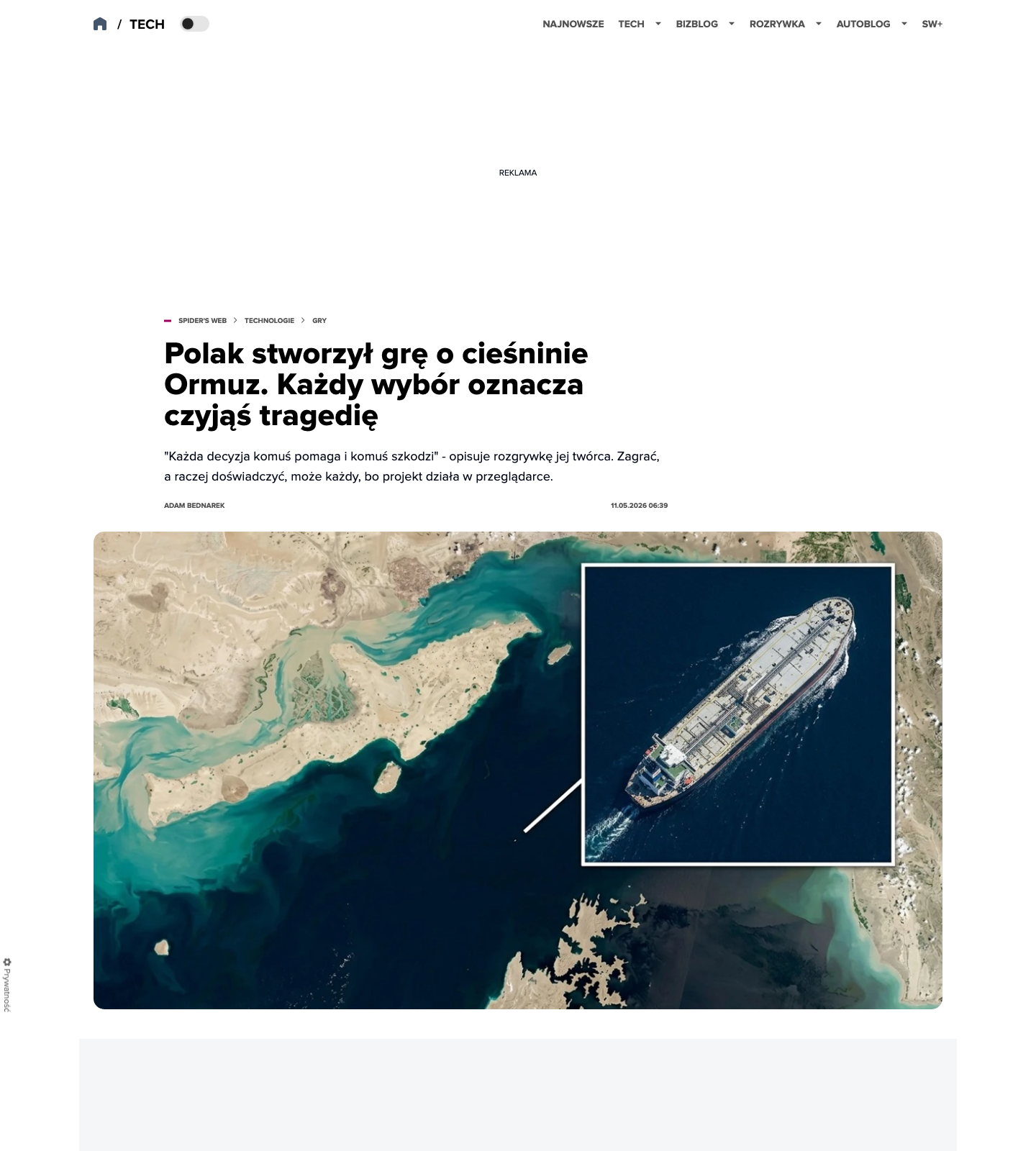
Screenshots matter here because the result is not abstract. BOTTLENECK appeared as a technology story, a media story, a games story, and a Polish journalism story. The same object moved through different editorial rooms and changed slightly each time.
WHY THIS MEDIA RESULT MATTERS
BOTTLENECK is not important because it got links. Links are a distribution trace. The more interesting part is what those links reveal about hunger inside media itself.
Newsrooms know the article page is tired. Audiences know it too. The default format still carries most of the work because it is fast, known, and institutionally safe. But the stories that define our time are often systems: energy shocks, war logistics, climate cascades, migration routes, public health failure, supply chains, propaganda, platform power. Systems are hard to feel from a flat text block.
BOTTLENECK gave one of those systems a small playable body. That is why the media reaction matters. It shows that a newsgame can still interrupt the feed, not by pretending to be entertainment, but by giving reporting a different pressure point.
The best sentence in the whole wave came indirectly through repetition: there is no way to win. That is not a slogan. It is the editorial spine of the project. The game works only if it refuses the comfort of solution.
The article explains the crisis. The game makes the constraint return under your hand.
PLAY BOTTLENECKCAPTURED MEDIA RESULTS
This ledger includes original coverage, translated pickups, syndication, and captured mentions from the first media wave. Morning Brew was captured in the local archive, but the saved screenshot shows a protected page rather than readable article content.
01 / EN / 2026.05.08
Ars Technica
02 / EN / 2026.05.08
Journalism.co.uk
03 / EN / 2026.05.09
Gizmodo
04 / DE / 2026.05.08
Golem.de
05 / VI / 2026.05.09
Congluan.vn
06 / PL / 2026.05.09
Wirtualne Media
07 / EN / 2026.05.08
Mezha
08 / UK / 2026.05.08
Mezha
09 / RO / 2026.05.10
G4Media
10 / ID / 2026.05.09
BisnisUpdate.com
11 / RO / 2026.05.10
ZiuaNews
12 / EN / 2026.05.08
Benzatine
13 / ES / 2026.05.08
Old School Club
14 / EN / 2026.05.09
A-Z Shopping
15 / ZH / 2026.05.11
unwire.hk
16 / PL / 2026.05.11
Press.pl
17 / EN / 2026.05.08
Conzit
18 / RO / 2026.05.11
e-politic.ro
19 / ZH / 2026.05.11
iNews HKET
20 / SV / 2026.05.11
Feber
21 / PL / 2026.05.11
CD-Action
22 / PL / 2026.05.11
Instalki.pl
23 / EN / 2026.05.11
Morning Brew
24 / PL / 2026.05.11
Spider's Web
This is still the beginning of the post-launch trace. Some links will disappear. Some will mutate. Some will be copied into pages that have no memory of where the first frame came from. That is normal.
What I want to keep is the proof of movement. A small independent newsgame, made quickly, built from reporting, carried across languages because the form made the issue easier to grasp. That is enough to make the next experiment less theoretical.