VIEW FROM SOMEWHERE
A physical and multimedia exhibition examining how journalism organizations market themselves - and what those messages reveal about the profession's place in public life.
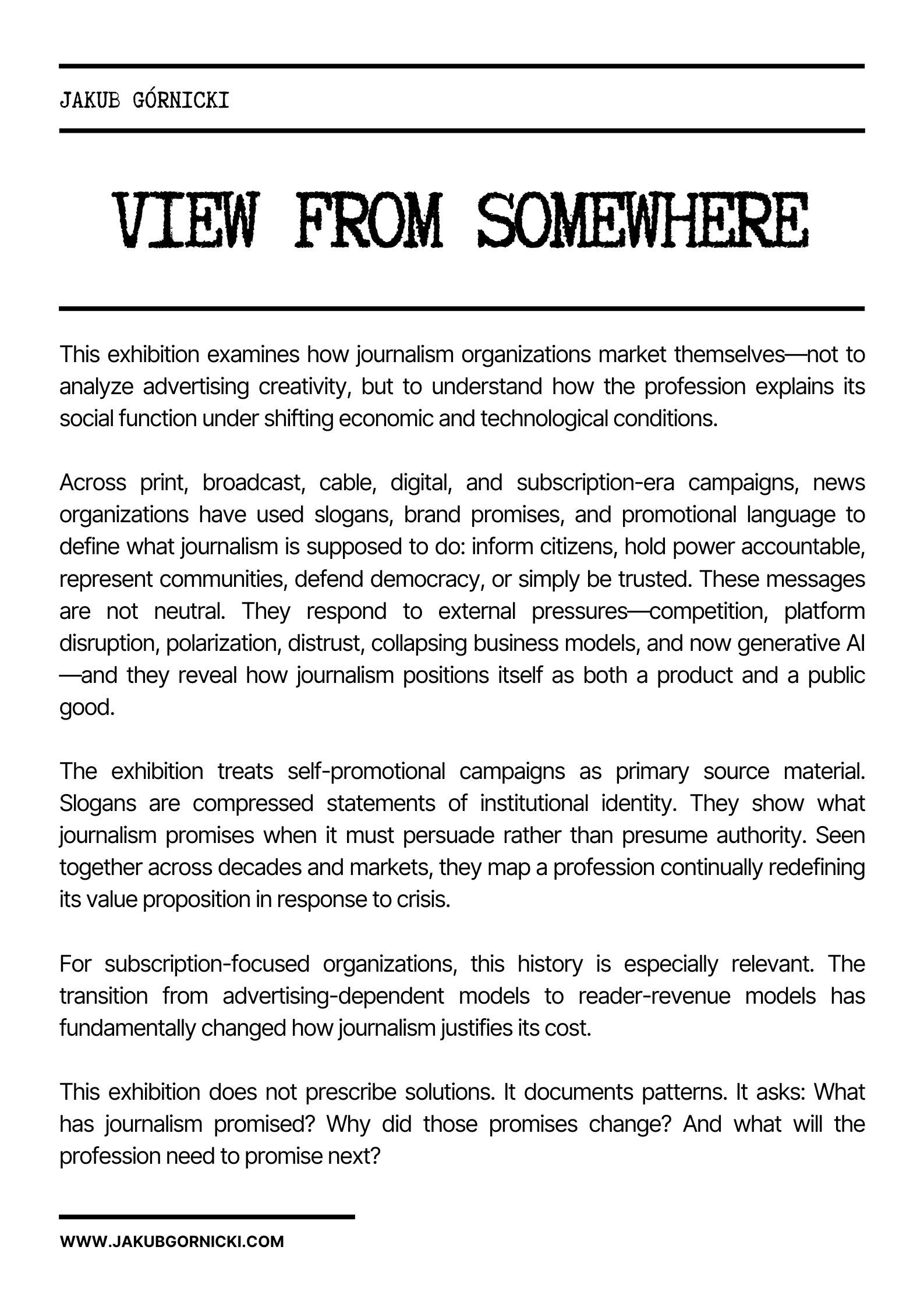
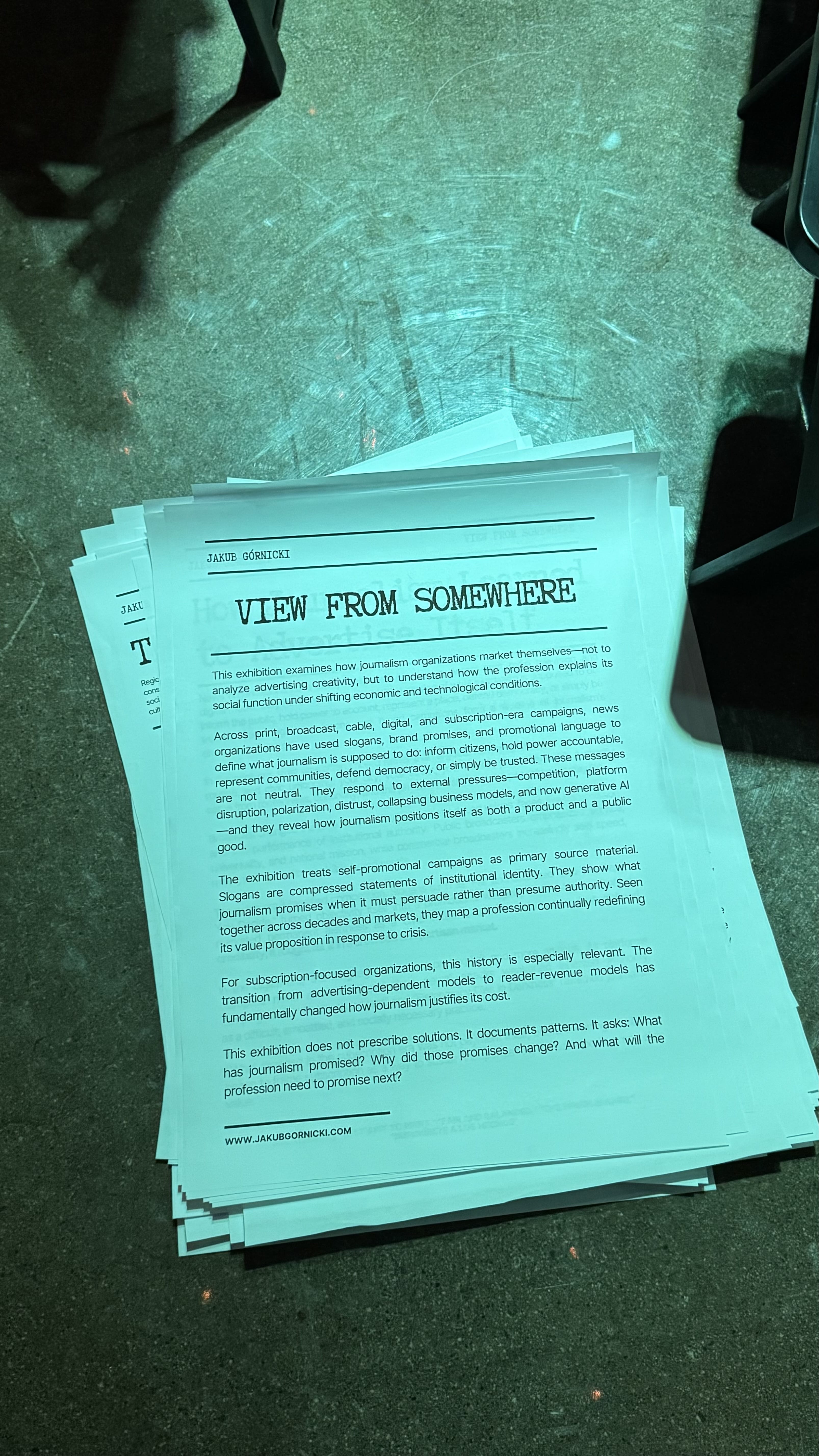
This exhibition examines how journalism organizations market themselves - not to analyze advertising creativity, but to understand how the profession explains its social function under shifting economic and technological conditions.
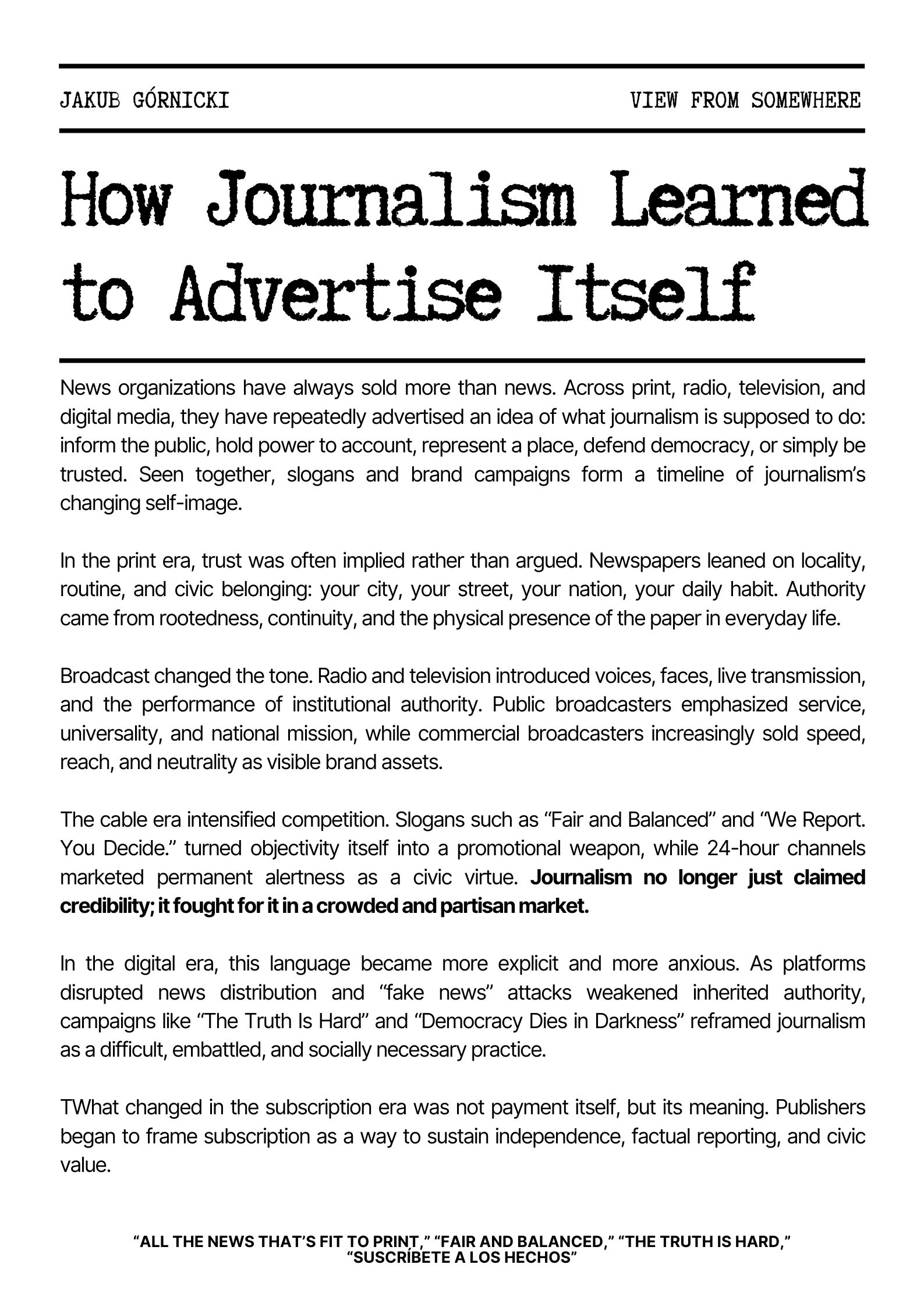
Across print, broadcast, cable, digital, and subscription-era campaigns, news organizations have used slogans, brand promises, and promotional language to define what journalism is supposed to do. These messages are not neutral. They respond to external pressures - competition, platform disruption, polarization, distrust, collapsing business models, and now generative AI.
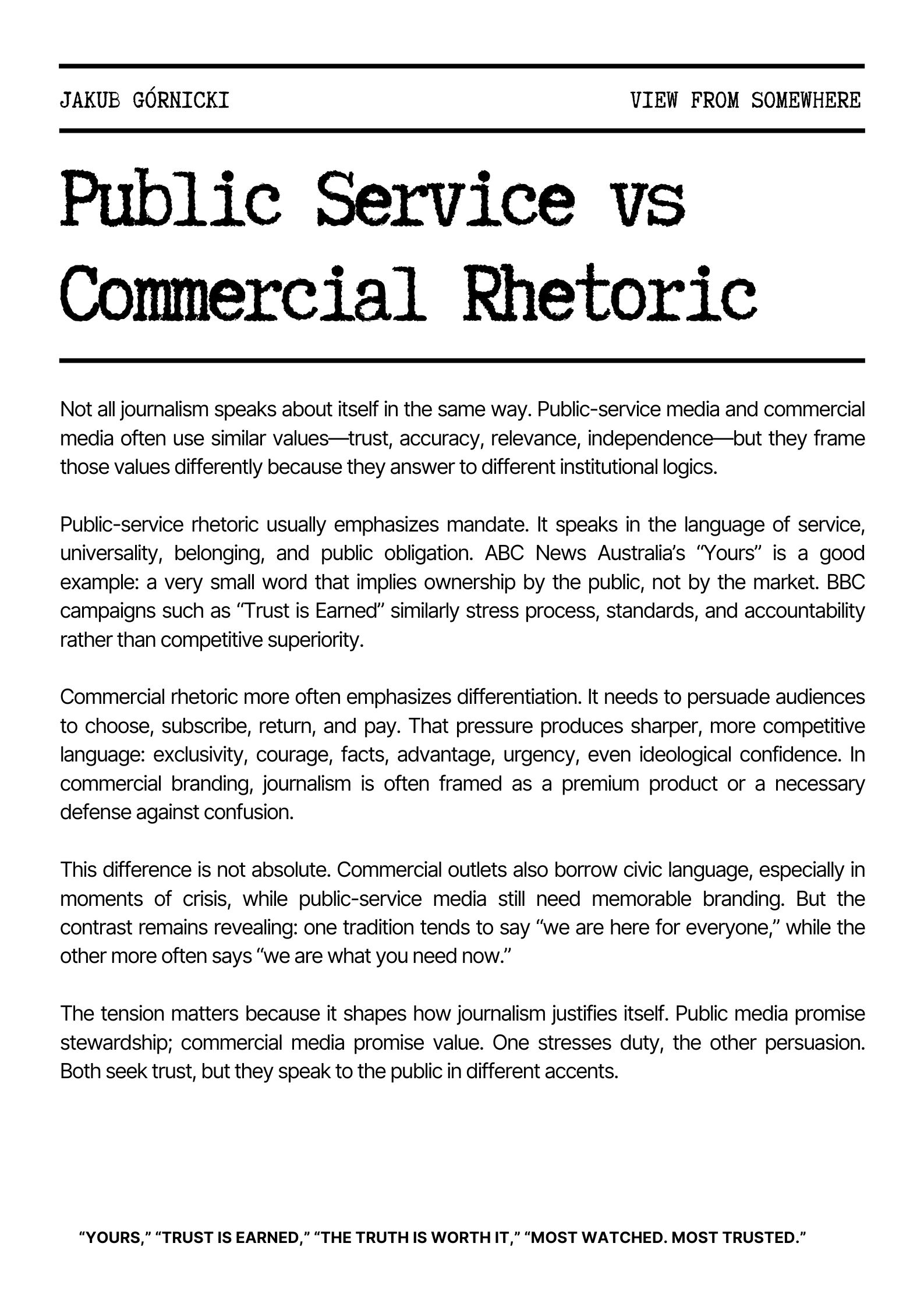
The exhibition treats self-promotional campaigns as primary source material. Slogans are compressed statements of institutional identity. Seen together across decades and markets, they map a profession continually redefining its value proposition in response to crisis.
This exhibition does not prescribe solutions. It documents patterns. It asks: What has journalism promised? Why did those promises change? And what will the profession need to promise next?
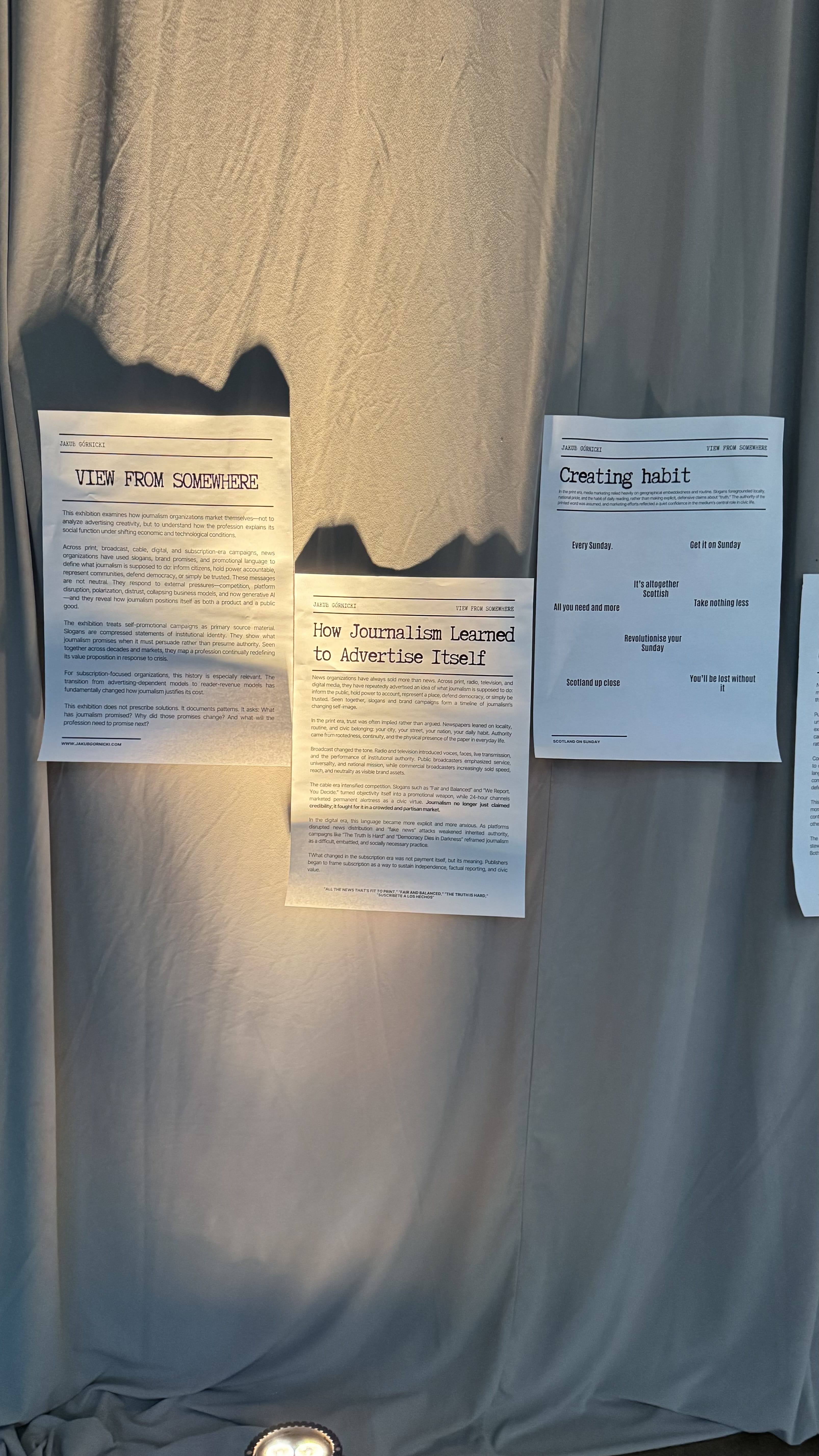
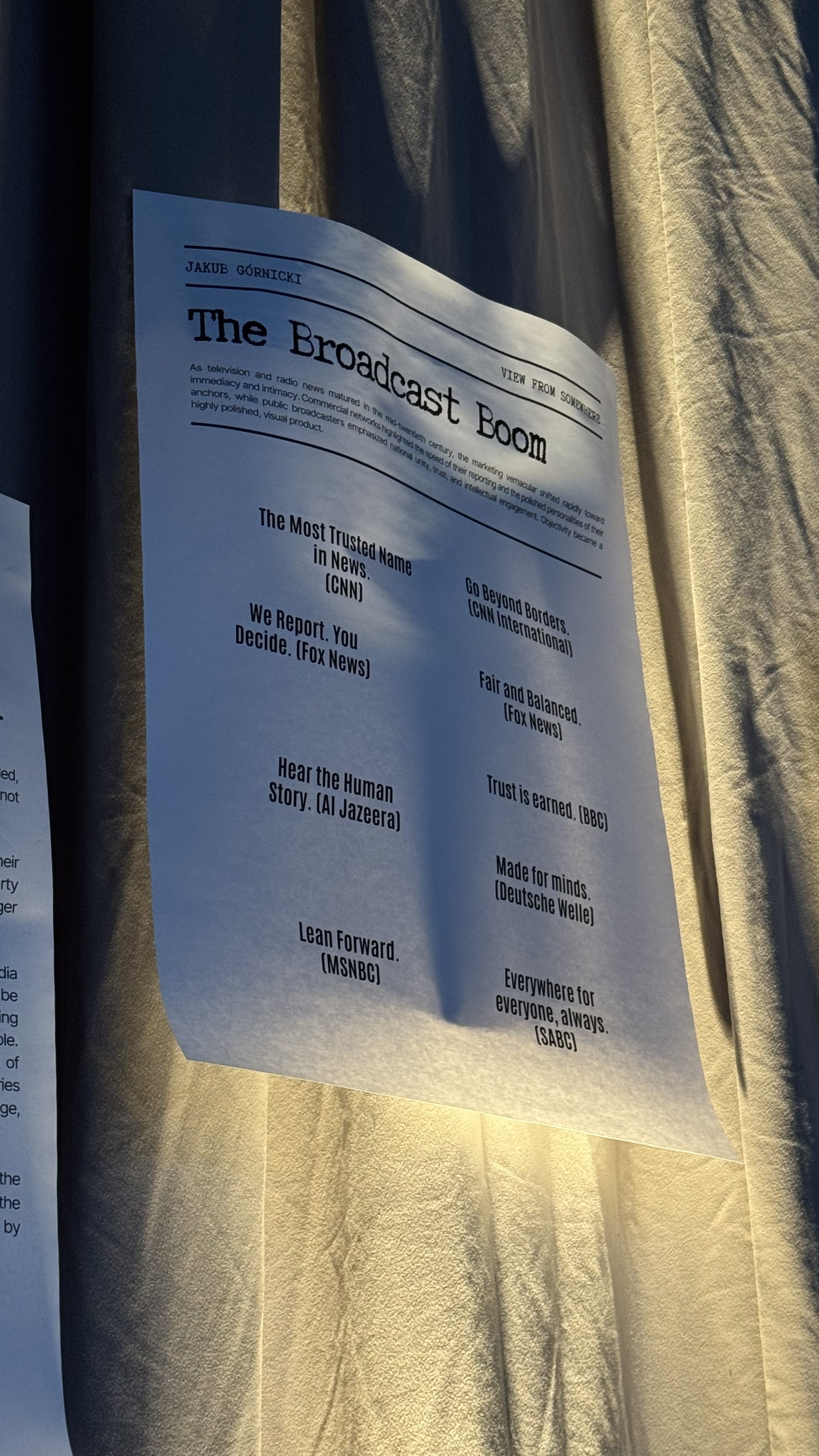
Clean prints. Each panel is 420 × 594 mm, black ink on white paper.
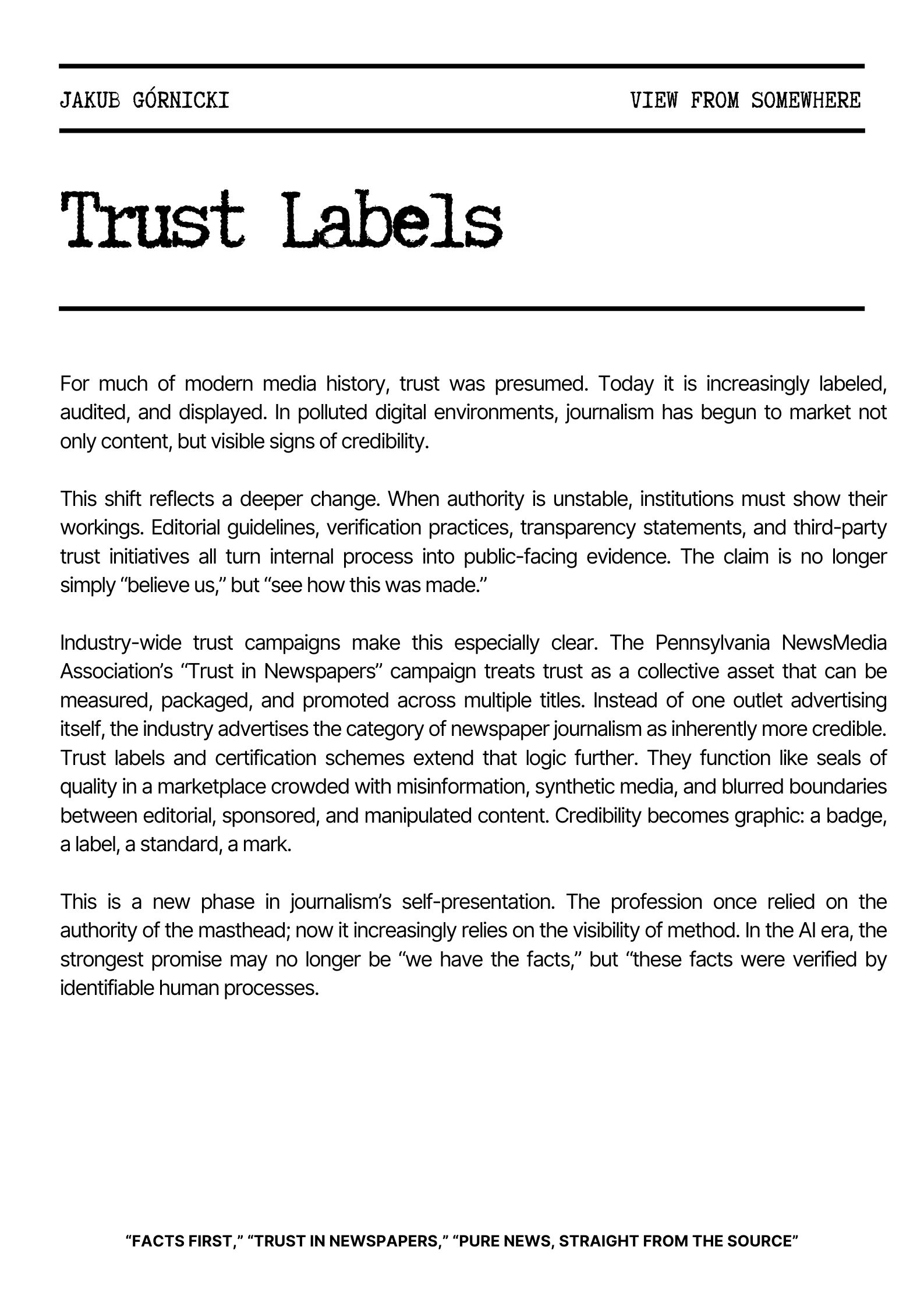
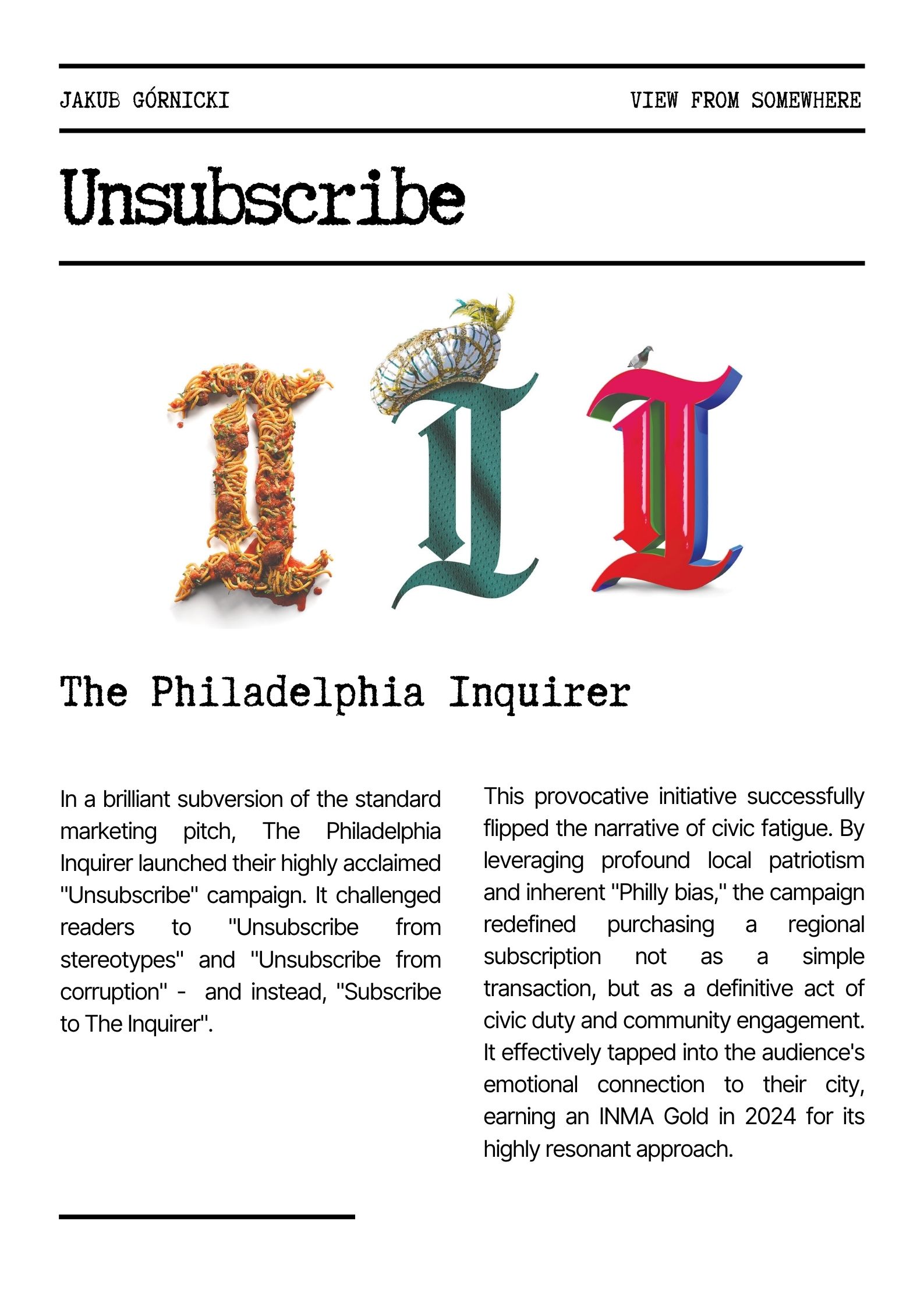
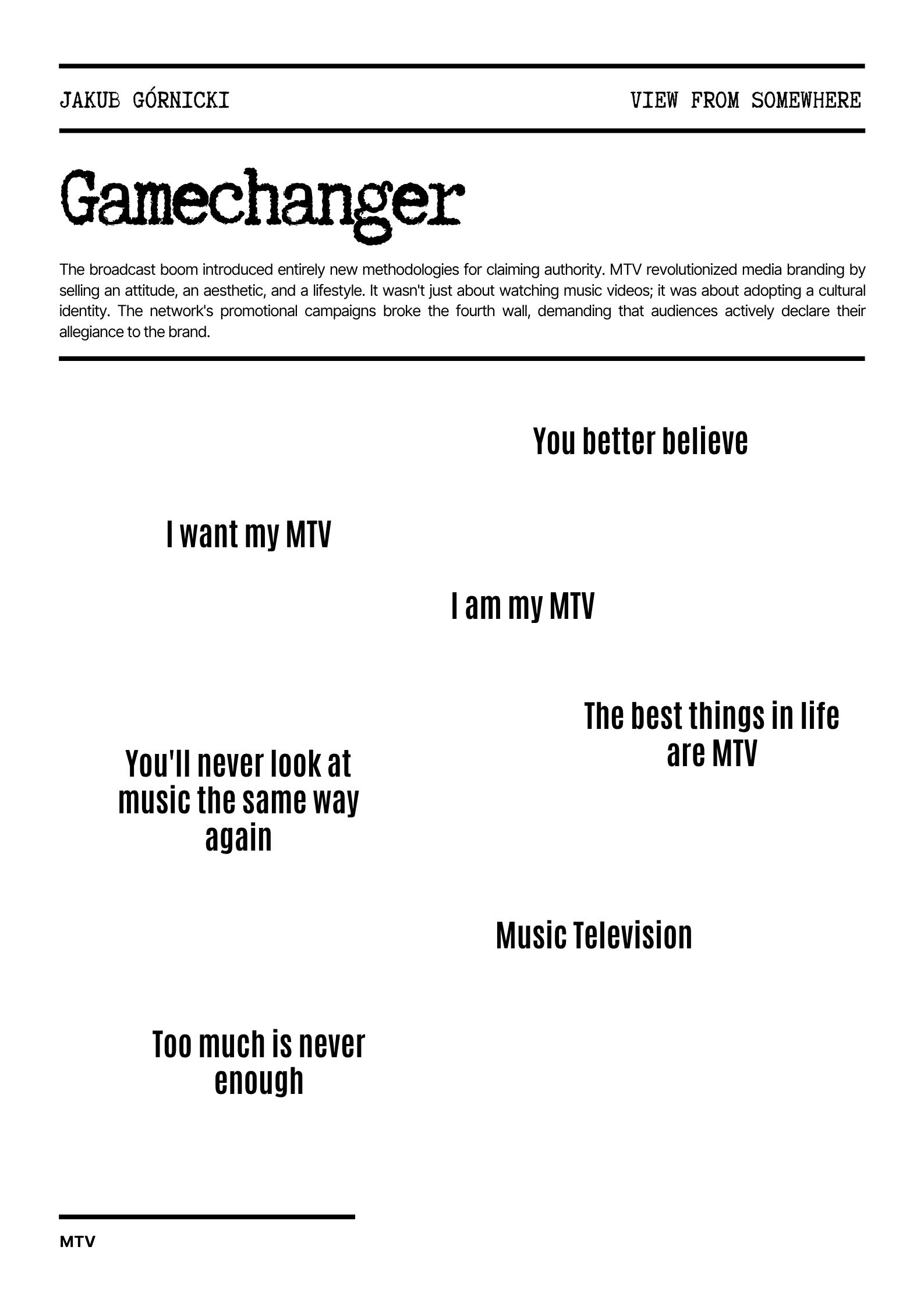
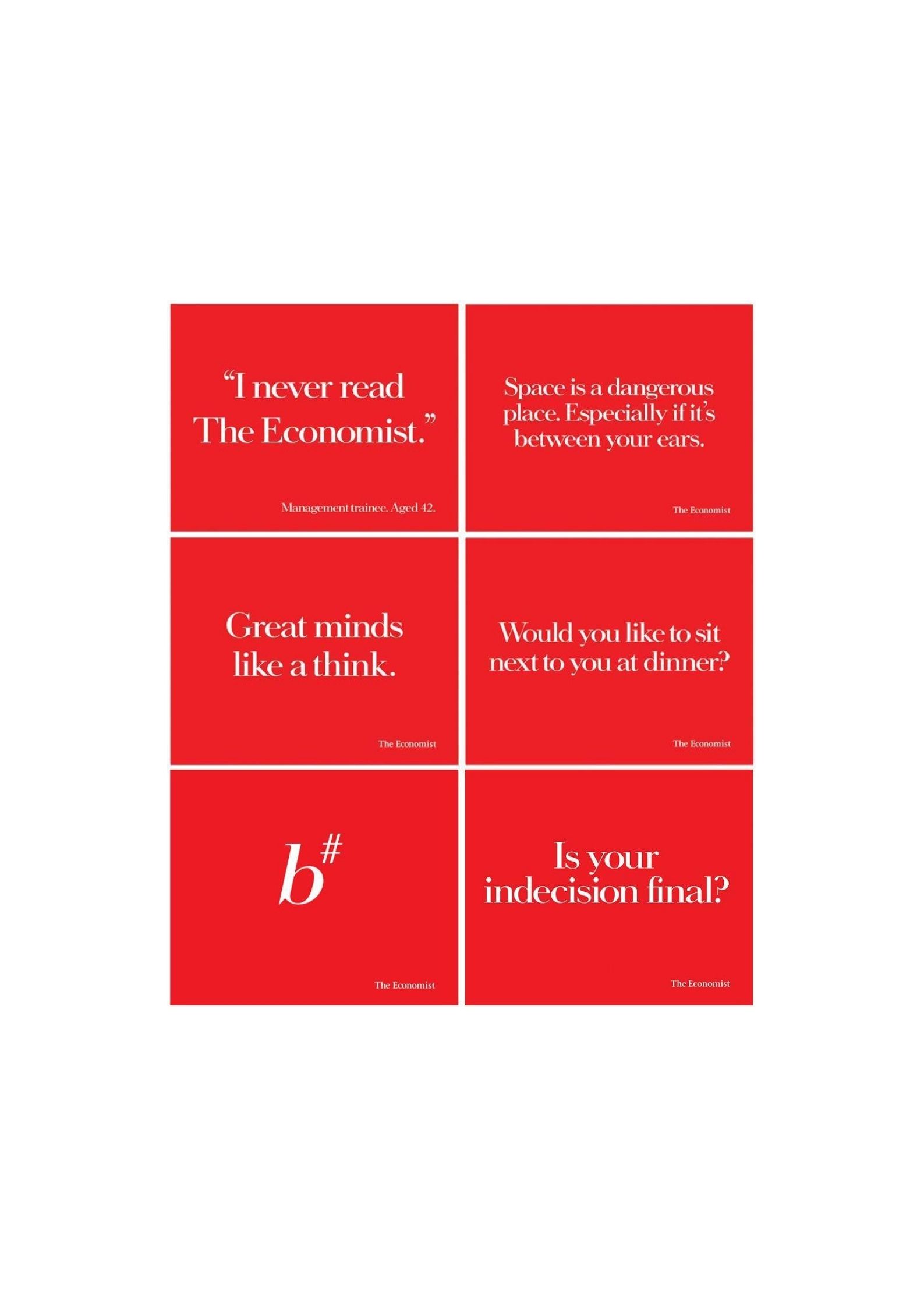
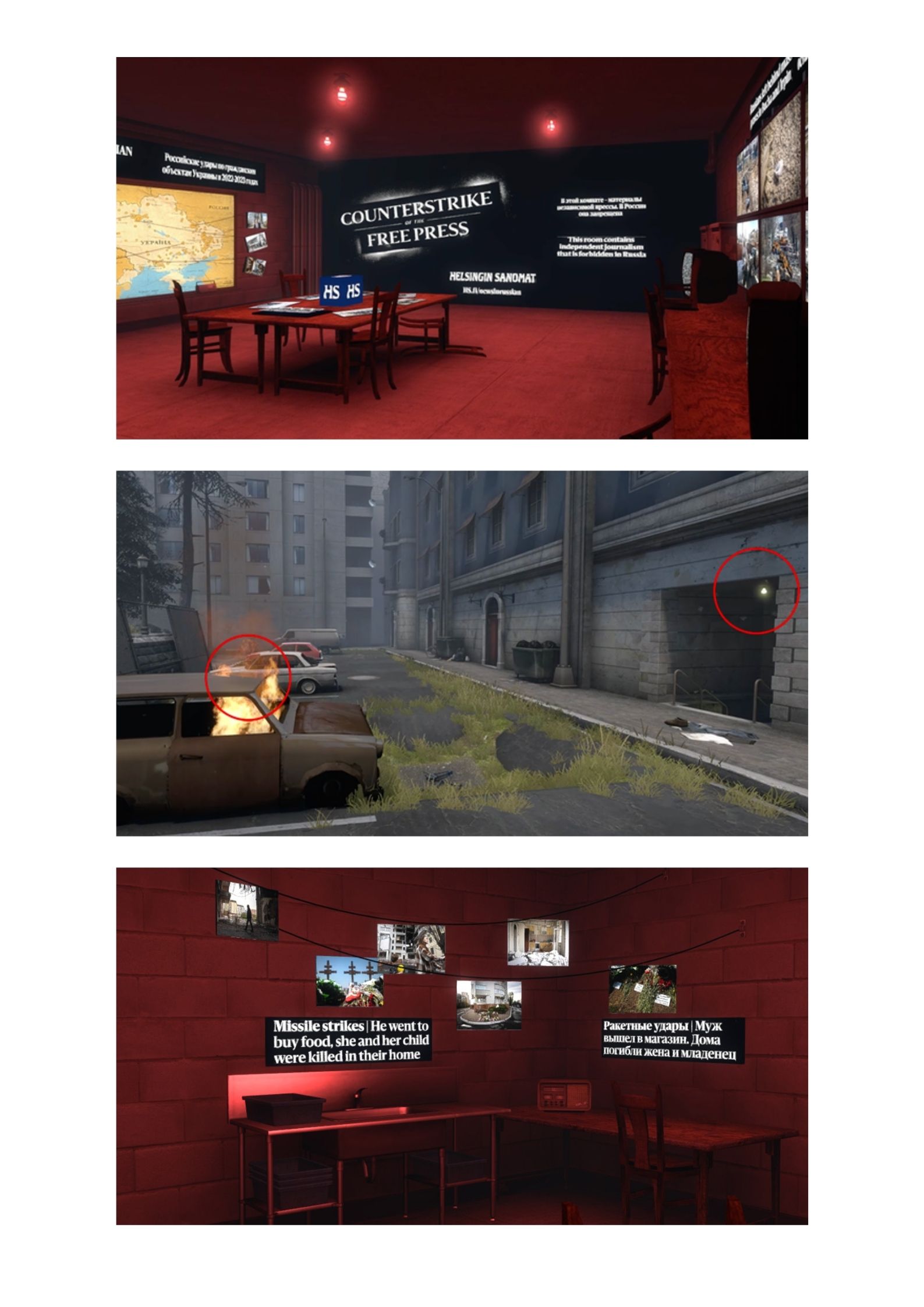
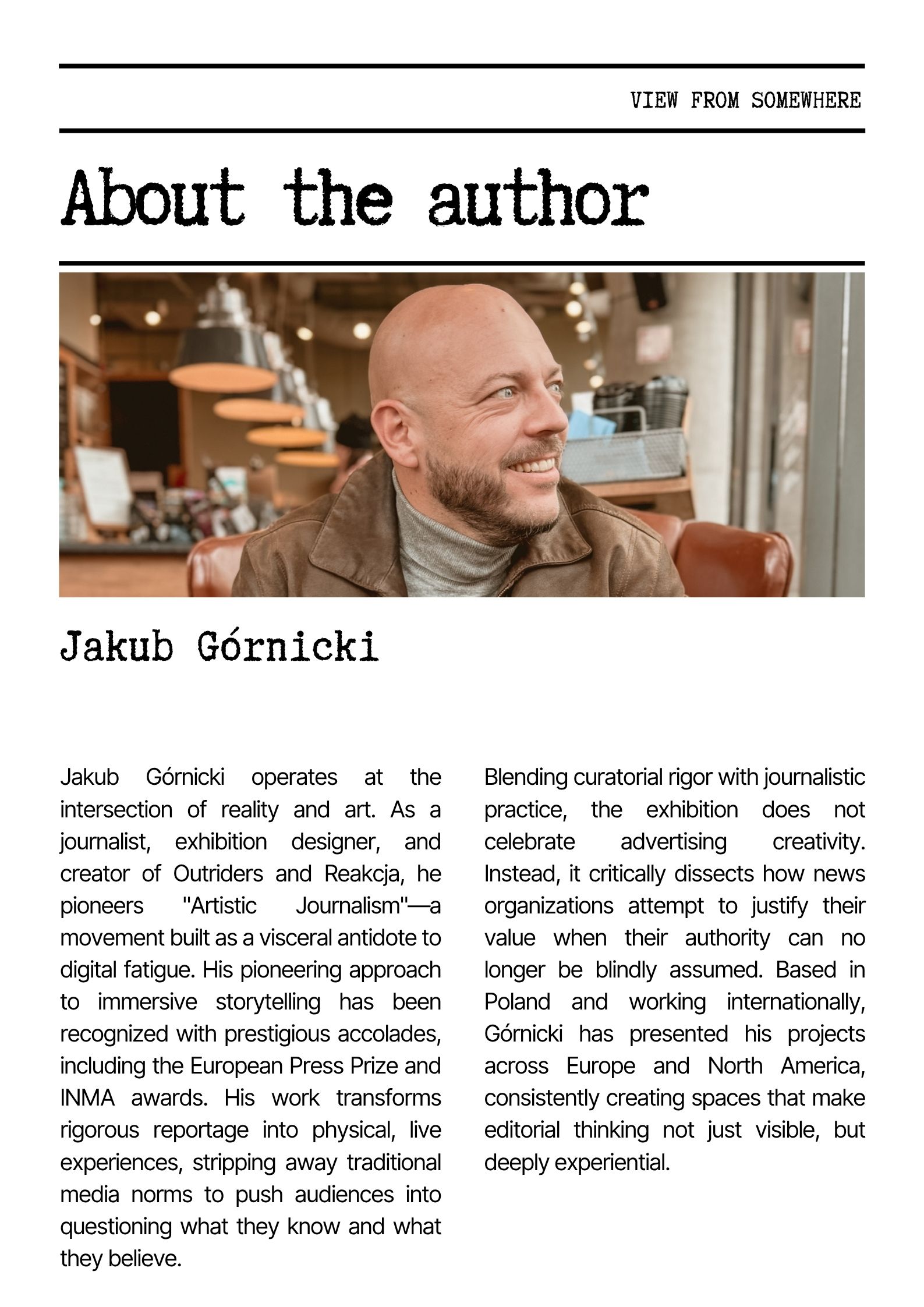
Printed panels. Hanging fabric. Floor spotlights. The exhibition premiered at the INMA World Media Congress in Toronto.
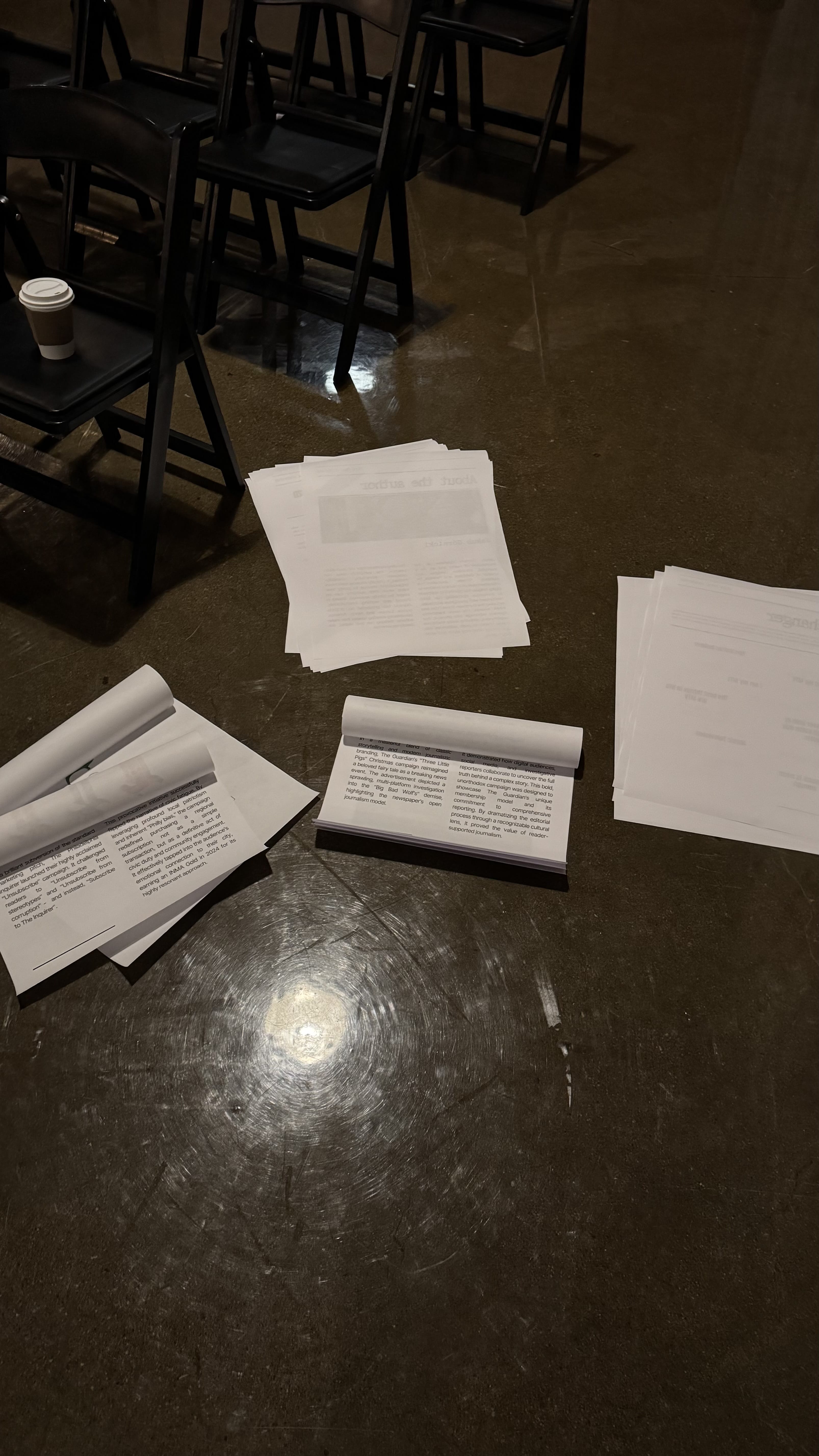
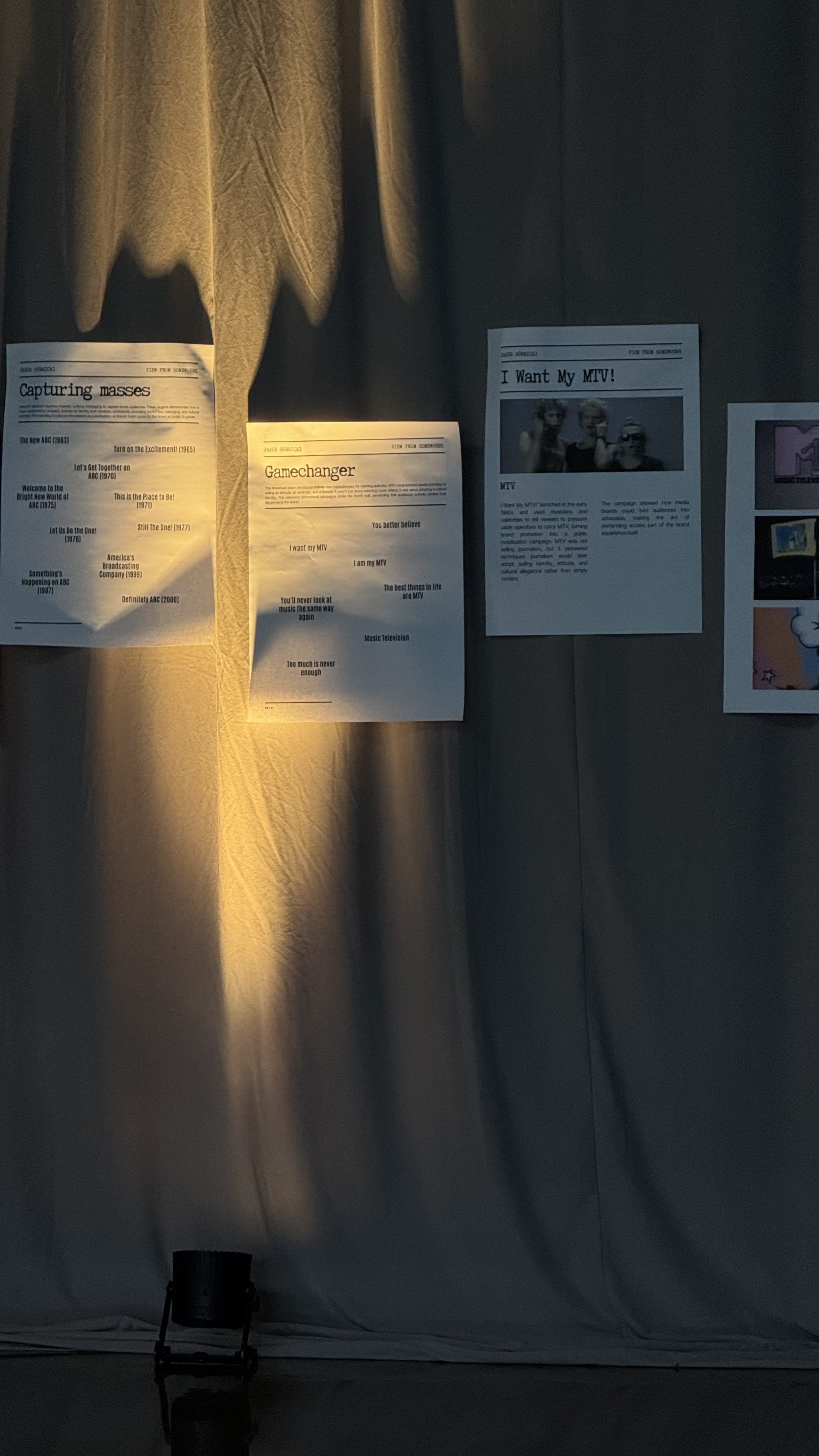
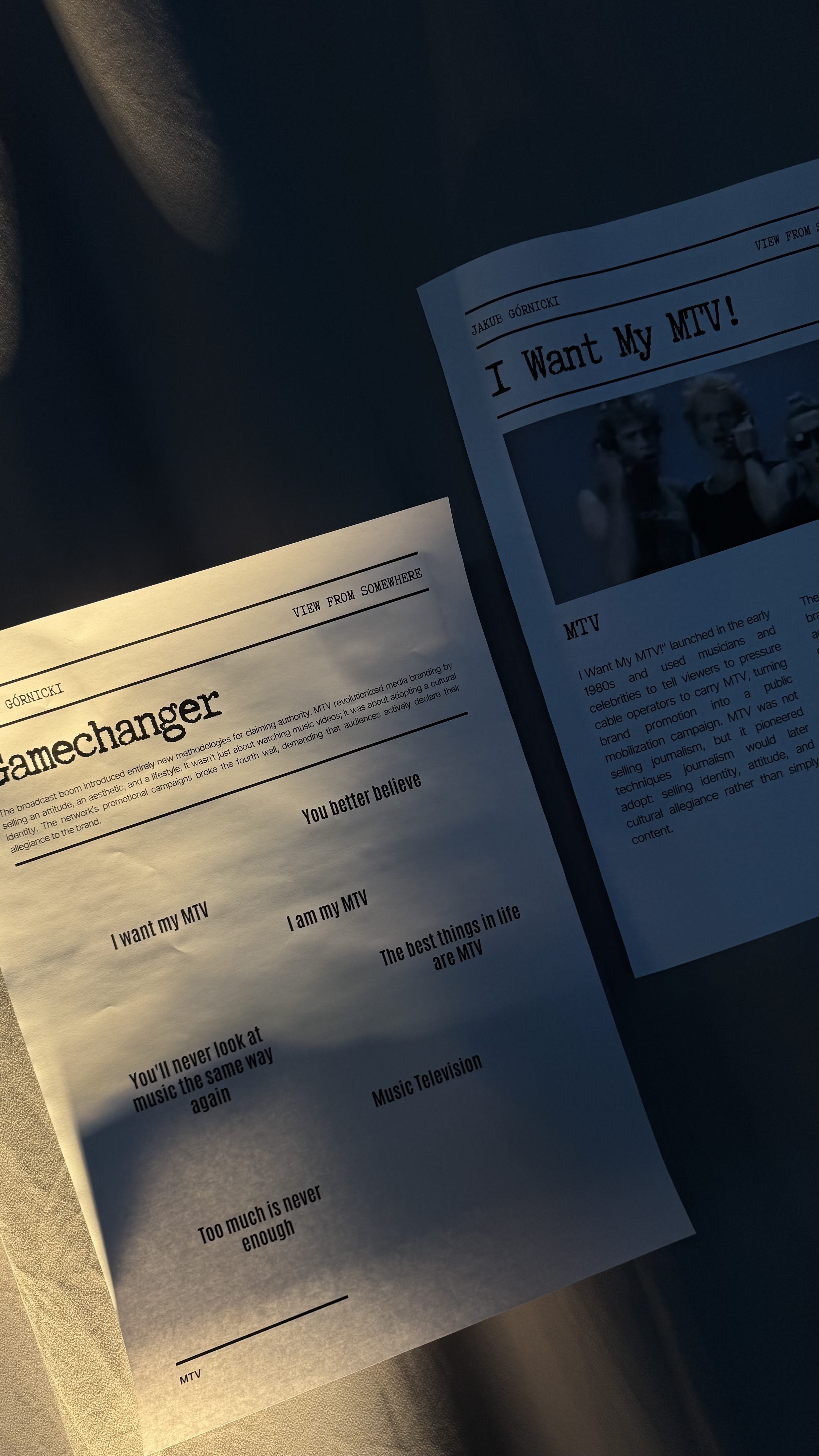
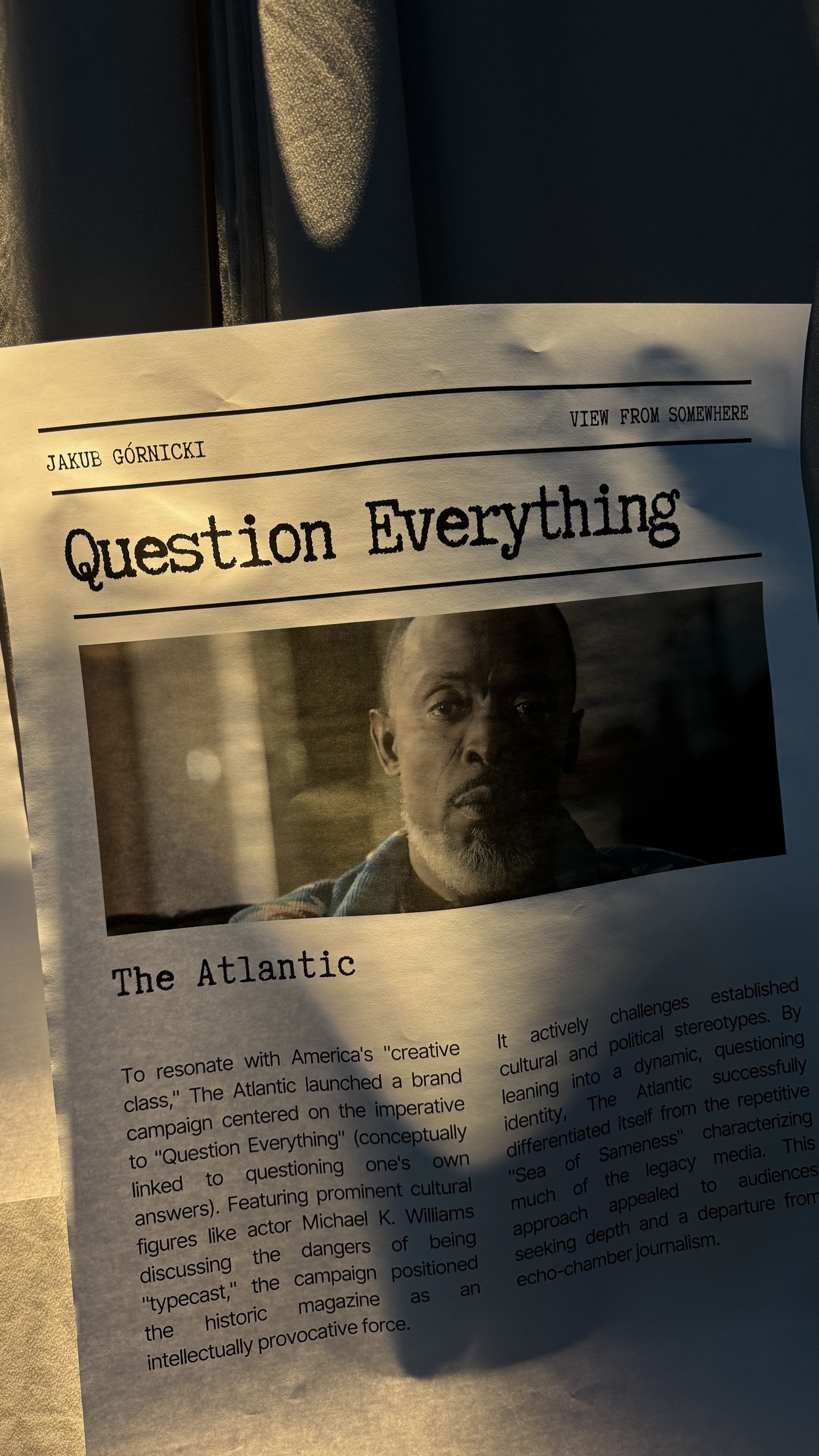
The exhibition documents campaigns that existed as video - television ads, short films, documentary spots. Some venues screen these films alongside the printed panels. Four from the archive:
INTERESTED IN BRINGING IT TO YOUR SPACE?
The exhibition is available for galleries, media conferences, newsrooms, and university programs. It travels as printed panels - minimal infrastructure required. Video programme available on request.
→ jakub.gornicki@gmail.com